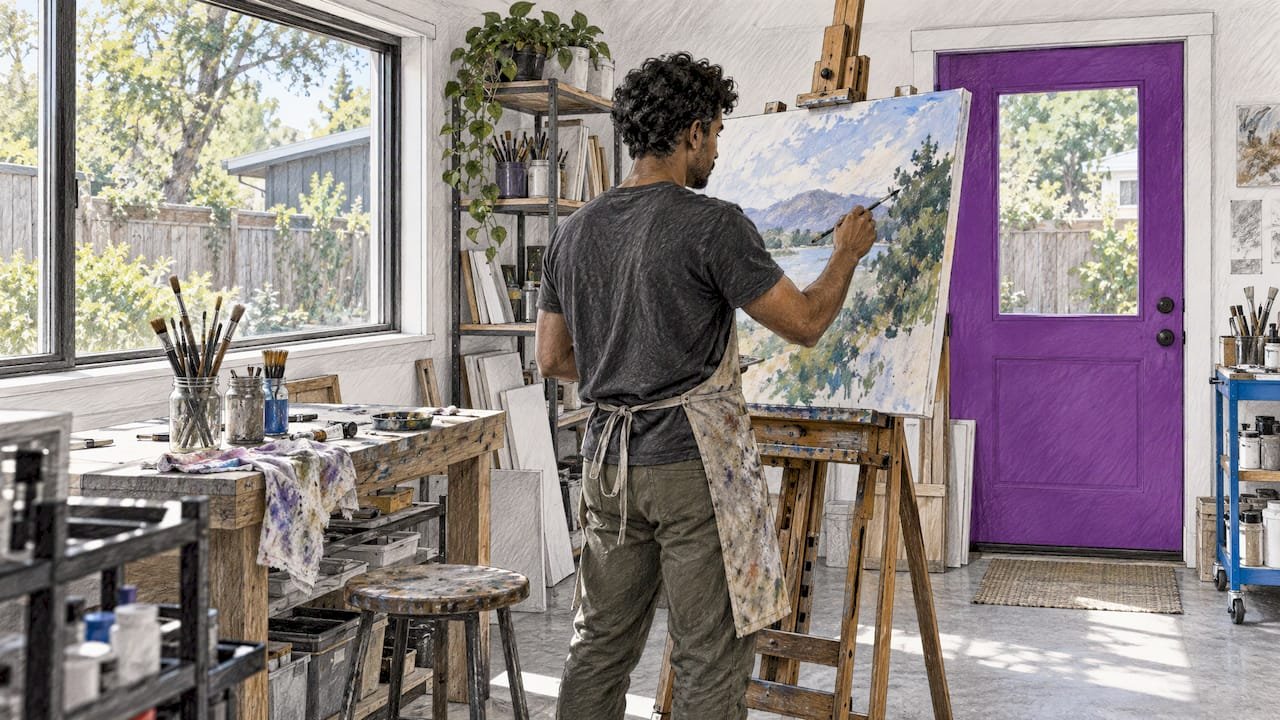
A backyard art studio works year-round when you get four things right: the footprint and permit, the light, an insulated shell you can heat and cool, and storage that keeps your supplies safe. An insulated panel kit is built to handle the shell part in days rather than months. Our DIY kits use structural insulated sandwich panels, which combine structure and insulation in one piece, so you can put your effort into the studio itself. This guide walks through each decision in order.
TL;DR
- Size the studio to your medium: about 10×12 ft (120 sq ft) fits an easel, a work table and room to step back, and larger tables or kilns need more.
- Check permits before you buy anything. Many towns require one for a studio with electricity or heat, and some require one above 120 sq ft.
- Insulation decides whether you use the studio in July and January. Our panel kits integrate it into the walls and roof.
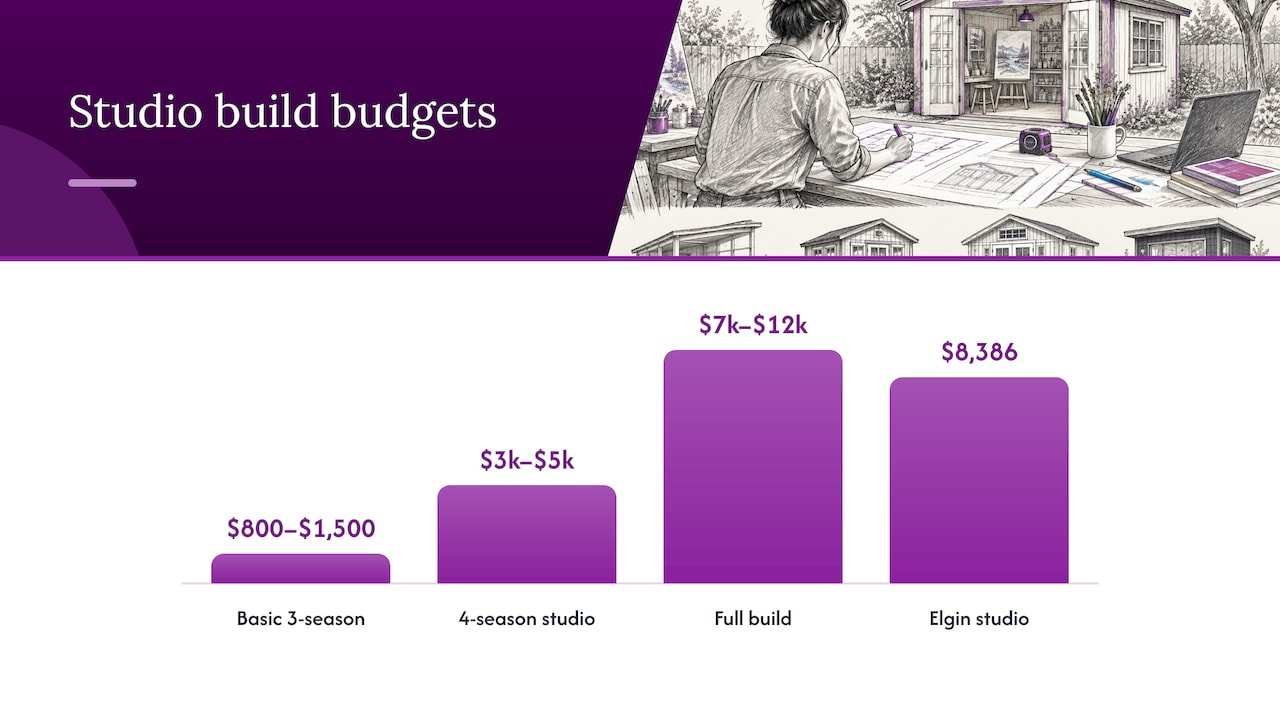
- Budgets in the US run from about $800 for a basic shed conversion to $12,000 or more for a fully conditioned build.
- Keep only a working set of supplies in the studio and store paint, adhesives and batteries somewhere temperature-stable.
Table of Contents
- Start with the work you make
- Permits: check before you order
- Shed conversion or a purpose-built studio
- What a backyard art studio costs
- Light, air and temperature
- Storage and layout that last
- How we think about it
- Build your studio shell with us
- FAQ
- Sources
Start with the work you make
The kind of art sets the room. Painters and drawers need wall space and steady light. Ceramicists need a wet zone, a sink and a ventilated, fire-resistant place for a kiln. Printmakers and sculptors need floor area and strong work surfaces.
One storage company suggests a 10×12 minimum and 12×16 if you want a large cutting table, with a 36-inch path from the door to the far end. That clear lane matters more than it sounds: you carry wet canvases and heavy boxes through it.
A useful way to plan is to split the floor into zones: a light zone by the window for painting, a wet zone near water, a dry storage wall, and a hot zone for kilns or heat tools kept away from everything else. The same source suggests this zoning.
Pick the spot in the yard
Three things decide location:
- Light. A north-facing window gives the steadiest, glare-free light. A skylight runs roughly $200 to $500 if a wall window isn’t possible.
- Utilities. The shorter the run from the house, the cheaper the power. A professional circuit run from the house is estimated at $400 to $800.
- Ground and drainage. A builder interviewed about a container pottery studio warned that once the structure is placed you lose the chance to fix grade, drainage, plumbing and electrical, so do site prep first. The same logic applies to any building.
Also measure setbacks, the minimum distance a building must keep from your property lines. They are set by your town, not by the manufacturer.
Permits: check before you order
Rules vary by city and county, so the only reliable answer comes from your local building or planning department. Here is how they look in practice:
- Port Townsend, Washington treats a shed as permit-exempt only for storage-type use at 200 sq ft or less with no permanent heat or plumbing, and says an art studio needs a permit. Its guide also says all electrical work needs a separate permit and inspection, and lists a 2023 fee of $634.29 for a 250 sq ft studio valued at $19,000.
- Hadley, Massachusetts sends homeowners to the zoning enforcement officer or building commissioner first, because the zoning bylaw sets lot area, yard setbacks and permitted uses for each district.
- An artist in Arvada, Colorado reported that the city requires permits above 120 sq ft and for any structure with electrical wiring (reported 2016, so confirm current rules).
The pattern: a studio with power, heat or plumbing usually triggers a permit even when a plain shed would not. Call your department with your size, your use and your utilities, and ask about setbacks and lot coverage at the same time. Our guides on a backyard office permit and on permits for backyard storage cover the questions to bring.
Shed conversion or a purpose-built studio
Converting an existing shed can work if the roof is watertight, the walls are sound, there is at least 7 feet of headroom and a window can go in, according to one conversion guide. A typical 10×12 shed gives you 120 sq ft.
A conversion inherits the shed’s limits: thin walls, little room for insulation, and a floor built for lawn mowers. A purpose-built studio starts from the work you do. Our DIY kits for rooms, gyms and offices are flat-pack and made with insulated sandwich panels, designed for assembly without special skills or heavy tools. Our build-time guide shows the on-site days involved, and our garden studio ideas page shows layouts that work in small yards.

What a backyard art studio costs
Published US figures from the last few years give a sense of range. They are estimates from content sites and individual builds, not quotes, and your local labor and materials will move them.
| Level | Typical budget | What it includes |
|---|---|---|
| Basic 3-season shed conversion | $800–$1,500 | Basic shell, light work, no real climate control |
| 4-season studio | $3,000–$5,000 | Mineral wool insulation, two 20A circuits, subpanel |
| Full build | $7,000–$12,000 | Mini-split, ERV ventilation, electrical permit, sink |
Two real examples show the upper end. A ceramist in Elgin, Texas built a 100 sq ft studio-showroom for $8,386, including $2,000 in labor. A 20-by-8-foot single-use shipping container for a pottery studio cost $4,000 to $5,000 or more before delivery and placement, and that build added site prep, a glass wall and a fire-resistant kiln room.
The choices that move the number most are insulation and climate control, electrical work, plumbing, and whether you pay for labor. Kits reduce labor because the panels are made to assemble quickly, and you can see our product lines on our products page.
Light, air and temperature
Good studio light is steady and color-accurate. The conversion guide above suggests LEDs rated 5000K to 5500K, which reads close to daylight, plus a north window where possible.
Temperature matters for people and materials. An unheated shed drifts to outdoor temperature, and freezing ruins latex and acrylic paint. Insulation estimates run $300 to $600 in a basic conversion. With sandwich panels the insulation is part of the wall and roof, which is why we build kits around them. See our pages on insulation that works year-round and PU panels for backyard builds.
Ventilation is a safety matter for studios that use solvents, resins, dust or kilns. Plan for fresh air from the start, and ask your local building department and your electrician what your setup needs. For kilns, build a separate, fire-resistant, ventilated space, as the container pottery studio above did.
Storage and layout that last
Storage is what keeps a small studio usable.
- Use walls, not floor. A full 4×8 pegboard panel is a flexible option, and hardware should go into studs, which may be spaced 24 inches apart in shed walls.
- Dedicate one wall. A 12-inch-deep floor-to-ceiling shelf wall with closed, lidded bins keeps out dust and pests.
- Keep a working set. Latex paint, adhesives, aerosols, batteries and electronics belong in stable-temperature storage, per the same source, with only what you are using in the studio.
A realistic setup also has a table at working height, a good chair, and a clear space in front of your work so you can step back and judge it.
How we think about it
Most people start a studio by asking what the shed costs. We start with what the room needs to do in February and August. If the walls and roof insulate by themselves, you can heat and cool a small space cheaply and keep paint, paper and your own comfort in order.
That is why we build our kits from structural insulated sandwich panels. The panels arrive flat, assemble without special skills or heavy tools, and give you a finished shell in days. Then your weekends go to wiring, shelving and painting, not to framing.
Decide the size, call your building department, and plan the light before you buy. The rest follows.
Kian
Build your studio shell with us
If you want a studio you can use in every season, our DIY kits for rooms, gyms and offices are made with insulated sandwich panels and designed for fast assembly with minimal on-site labor. They are customizable, so you can specify size and window placement for your medium. Our guide to choosing an insulated backyard room kit is a good next step.
FAQ
How big should a backyard art studio be?
For painting and drawing, about 10×12 ft (120 sq ft) fits an easel, a table, storage and room to step back. Plan 12×16 ft if you need a large cutting or layout table. Keep a clear walking path of about 36 inches.
Do I need a permit for a backyard art studio?
Usually yes if the studio has electricity, heat or plumbing, and in some towns once it passes 120 sq ft. Rules differ by city, so contact your local building department with your size, use and utilities before you order.
How much does a backyard art studio cost?
Published US estimates run from about $800 to $1,500 for a basic shed conversion to $7,000 to $12,000 for a fully conditioned build. Your insulation, electrical work and labor choices drive most of the difference.
Can I use my studio in winter and summer?
Yes, if it is insulated and has heating and cooling suited to its size. Insulated panel walls and roofs make that easier, and a small heat pump or mini-split can then keep the room comfortable.
Sources
- Port Townsend building permit guide
- Hadley, Massachusetts permitting guide
- Backyard artist studio build: the permit monster
- How a ceramist built her backyard studio
- Shipping container converted into backyard pottery studio
- Shed to art studio under $3,000
- Convert and insulate a shed for creative work
- She shed ideas: design, organization and permit rules
- Shed conversion ideas for a small art studio