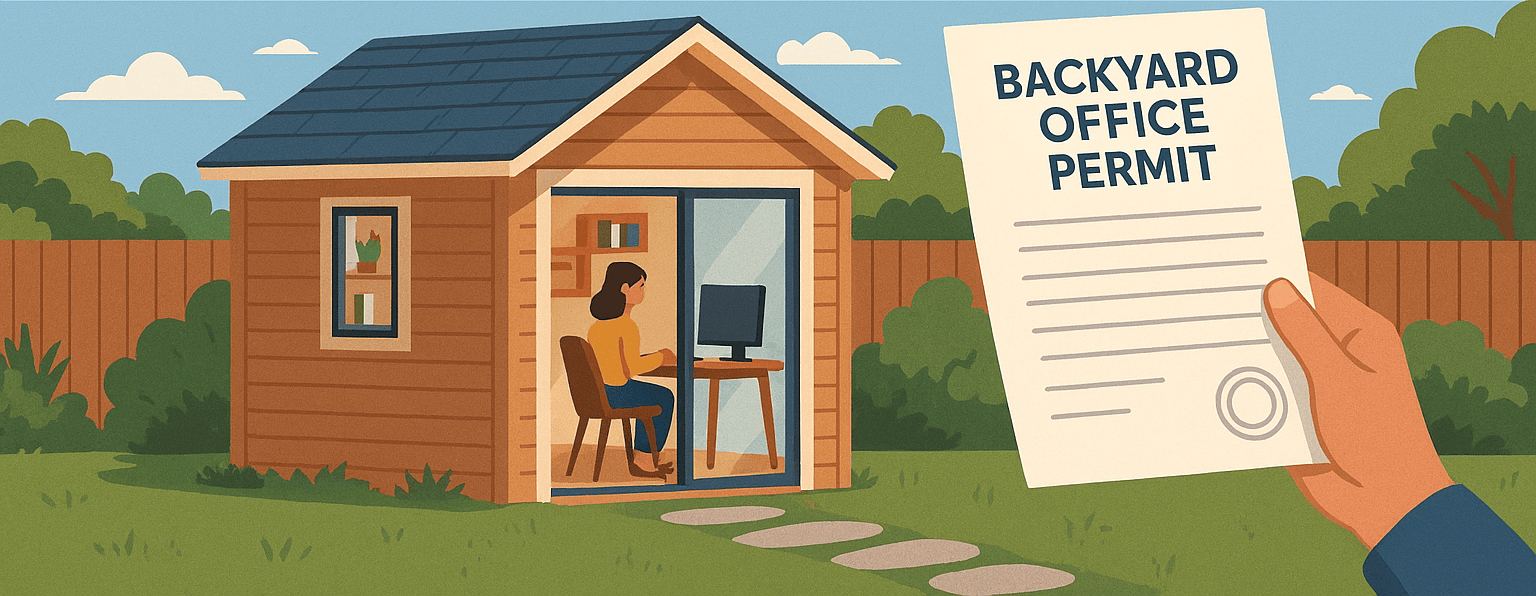
Permits needed for a backyard office or backyard storage.
Are you dreaming of a dedicated workspace just steps from your back door? A backyard office offers the perfect solution for remote work, creative pursuits, and focused productivity.
The popularity of backyard offices is soaring. Many people are embracing the freedom and convenience of working from home. But building a backyard office involves more than just selecting your ideal space; you need to understand the legal landscape, starting with backyard office permits.
In this guide, we’ll delve into everything you need to know about backyard office permits, ensuring your dream home office becomes a permitted reality. Whether you’re considering a modular office or a prefab office with structural sandwich panel, understanding the permit process is the first step. Let’s dive in and make sure your backyard office dream becomes a permitted reality!
Why Permits Are Necessary for a Backyard Office
Obtaining backyard office permits is not just a formality; it’s a critical step that ensures your structure is safe, compliant, and contributes to the overall well-being of your community.
Firstly, permits ensure your build complies with zoning regulations. Zoning regulations dictate the parameters of what you can build on your property, including size, location, and the uses allowed. Violating these regulations can lead to legal issues. You might face fines or, in extreme cases, be forced to demolish the structure.
Secondly, permits guarantee adherence to safety codes and construction standards. Inspections, conducted as part of the permitting process, ensure the structure meets these standards, protecting the occupants of your backyard office as well as your neighbors. They help prevent potential fire hazards, electrical issues, and structural failures.
Obtaining permits also safeguards your property value. A permitted backyard office legitimately adds value to your property. Conversely, an unpermitted structure can make it difficult to sell your home and could even lower its value. Buyers might be hesitant due to the potential legal liabilities associated with unpermitted additions.
Finally, permits contribute to the well-being of the community. They help maintain neighborhood aesthetics and property values while ensuring that construction is done safely, minimizing potential risks to neighbors.
In conclusion, backyard office permits protect you, your property, and your community.
Local Zoning Regulations and Permit Types
The world of backyard office permits is highly location-dependent. That is why it is important to understand zoning regulations.
Zoning regulations vary significantly depending on your specific location – your city, your county, or even your homeowner’s association. These regulations govern what you’re allowed to build on your land and how you can use it. Understanding these rules is crucial.
Zoning laws dictate permissible land use, building setbacks (how far your structure must be from your property lines), height restrictions, and the maximum allowed building size. For instance, a residential zone might have very different rules compared to a commercial zone.
To navigate this, the best place to start is your local building department. You can often find this information on the city or county’s website. They will have detailed information about zoning rules in your area. You can also consult with local contractors or architects, who are familiar with the permitting process in your area. If you’re looking for an alternative, consider a container office, which has the added advantage of being mobile. container office
Now, let’s talk about the types of permits you might need:
- Building Permits: These are essential for the construction of any structure, including your backyard office. They cover the structural aspects, ensuring that the build meets safety and structural integrity standards.
- Electrical Permits: If your backyard office includes any electrical wiring or fixtures, you’ll need an electrical permit. This ensures everything is up to code and safe.
- Plumbing Permits: If your office will have plumbing, such as a bathroom or sink, you will need to obtain a plumbing permit.
In addition to these, there might be other permits, like HVAC (heating, ventilation, and air conditioning) permits, depending on your setup.
Finding out which permits are needed is the first step. The local building department is always your best resource.

Permit Application Process: A Step-by-Step Guide
Obtaining backyard office permits can seem daunting, but breaking it down into manageable steps makes the process less overwhelming. Building a modular office can make the permitting process easier. modular office
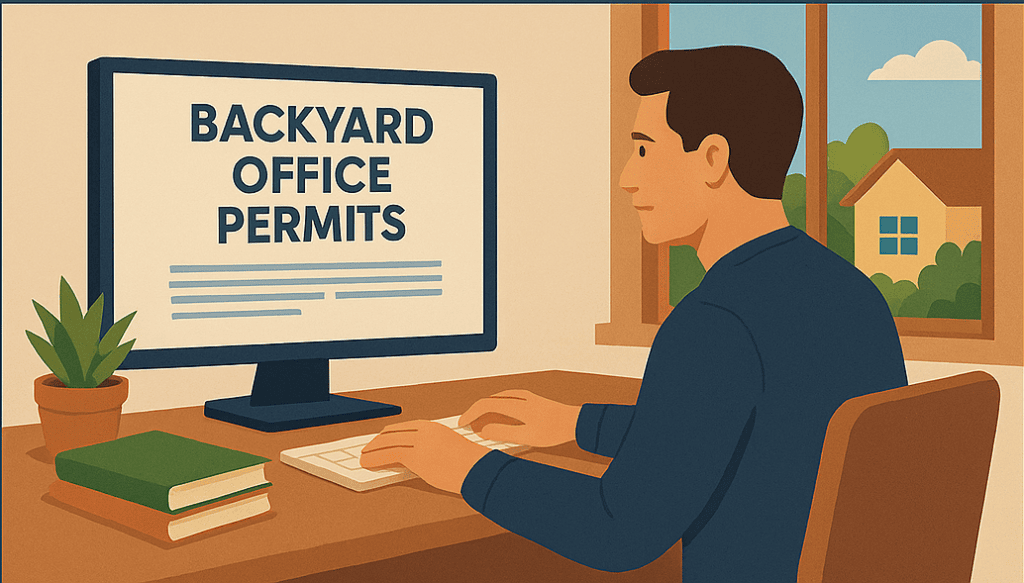
Step 1: Research and Planning: Begin by thoroughly researching local regulations. Next, develop detailed plans for your modular office or prefab office, including size, layout, and materials. Consider the architectural style and how it conforms to local standards. It may be wise to consult with an architect or a building designer at this stage.
Step 2: Gather Required Documents: Compile the necessary documentation. This usually includes site plans, building plans, surveys, material specifications, and energy calculations. Local requirements may vary, so this is critical.
Step 3: Submit the Application: Submit your completed application and all required documents to your local permit office. Ensure your application is complete and accurate. It is a good idea to create a checklist.
Step 4: Application Review: The permit office will review your application. This can take some time, so be patient and start early.
Step 5: Addressing Comments and Revisions: The permit office may have comments or require revisions to your plans. You must be prepared to make changes.
Step 6: Permit Issuance: Once your application is approved, the permit will be issued. It’s time to pay the fees and review the permit duration.
Step 7: Start Construction (with permit posted): Finally, you can begin construction. Ensure the permit is posted at the construction site and visible at all times.
The specifics of the permitting process will vary, so be sure to check with your local authority. Also you can check the city regulation for your information.
Backyard Office Design Considerations & Permit Impact
Your design choices for your backyard office have a direct impact on the permit process. If you’re considering a modular office or a prefab office, be sure to consider the building materials and how it conforms to the rules.
The size of your backyard office is one factor that affects permitting. The bigger the structure, the more stringent the regulations might be. Height is another factor, as height restrictions are common. Location on your property and your planned setbacks are also essential. Then there’s the architectural style and how it complements your existing home. Always make sure to adhere to all of the local zoning regulations.
Building materials also influence the permit process. If you plan to use structural sandwich panels, for example, you will need to make sure that these materials meet local building codes. Prefab offices often have advantages in terms of the permitting process, as they are designed to standard specifications.
Consider all of these factors during the planning phase. Consider a DIY kit for a simple, cost effective solution. DIY kit
Inspection and Approval: What to Expect
The purpose of inspections is to make sure your backyard office complies with the approved plans and local building codes.
First, you’ll need to schedule inspections. During the inspection, an inspector will review the work in progress and compare it to the approved plans.
Common areas of inspection include:
- Electrical Systems: Inspections of wiring, outlets, and electrical panels.
- Plumbing (if applicable): Inspections of plumbing fixtures, pipes, and drains.
- Structural Elements: Inspections of the foundation, framing, and overall structural integrity.
- Overall Compliance: Inspections to ensure all work adheres to the approved plans and specifications.
To prepare for an inspection, make sure your site is clean, organized, and accessible. You’ll want to address any issues promptly.
If you fail an inspection, you’ll be informed of what needs to be corrected and will have to schedule a re-inspection. Make sure you understand the reasons for any failures. Work with a contractor or your designer to correct issues.
Potential Challenges and How to Overcome Them
Obtaining backyard office permits can sometimes present challenges, but with a strategic approach, you can overcome these obstacles.
It’s not uncommon to encounter roadblocks. Complex zoning regulations and bureaucratic processes can be tricky to navigate, while application rejections are possible.
Here’s how to overcome these obstacles:
First, thoroughly research local regulations. Consult with architects, engineers, or permit specialists. Second, be sure to submit a complete and accurate application. Be prepared to answer questions from the permit office. Finally, be patient. The permitting process can take time. Always maintain a positive attitude. Document everything.
Conclusion: Enjoying Your Permitted Backyard Office
Before you start construction, it’s essential to obtain the right backyard office permits. Then you can have peace of mind knowing your office complies with the law. This can increase your property value, and lead to years of enjoyment and use of your space.
To get started, research your local backyard office permits regulations.