The cleanest way to cut structural insulated panels is to cut the skins with a 7-1/4" circular saw fitted with a carbide blade, either double-cutting from both sides or cutting one skin and finishing the foam by hand, then routing recesses for splines with a SIP groover or hot knife. Standard hand tools handle detail work and inside corners. Before you touch a blade to a facing, confirm the cut is safe with your supplier. Load paths and spline layouts vary by panel design, and a horizontal cut in the wrong spot can undo the strength you are paying for.
TL;DR:
- Using a carbide-tipped circular saw is essential for straight cuts, but it must be used carefully to avoid damaging the panel’s load-bearing features.
- Cutting window or door openings requires precise measurement after panel placement and proper grooving of spline channels to prevent future structural issues.
- Overcutting or altering load-bearing facings without consulting the manufacturer or engineer can significantly weaken the panel’s integrity.
- Factory-cut panels with pre-installed openings and chases reduce risks and save time for builders, avoiding common field-cut errors.
- Proper ventilation, foam waste containment, and having technical support ready are crucial for safe and clean SIP panel handling during construction.
Table of Contents
- Sip Panel Cutting Tools You Should Have on Hand
- How Do You Cut a Window or Door Opening in a SIP Panel?
- Which Blade and Technique Give You the Straightest Cut?
- What Can Cutting a SIP Panel Damage Structurally?
- How Do You Keep a SIP Job Site Clean of Foam Waste?
- When Should You Call the Supplier Instead of Cutting It Yourself?
- What I’ve Learned Watching Builders Cut SIPs in the Field
- Fewer Cuts, Fewer Risks: Build With Factory-Cut Panels
- Where to Check the Official Specs Before You Cut
- Sources
Sip Panel Cutting Tools You Should Have on Hand
Before you start marking panels, get the right gear staged. Each tool handles a different job, and grabbing the wrong one for the task is how you end up with ragged edges or a panel you have to scrap.
- 7-1/4" or 16" circular saw with a carbide-tipped blade — the workhorse for straight through-cuts; use the double-cut technique on thicker cores.
- SIP groover or hot knife — routs foam cleanly for spline and nailer channels; produces fumes, so plan for ventilation.
- Panel router or mechanical recess cutter — better suited to repeatable, precise grooves when you’re cutting a lot of panels on one job.
- Beam-cutter attachments or chainsaw guides — convert a standard circular saw into a guided cutter for oversized panels or extra-thick cores.
- Reciprocating saw and a good hand saw — finish cuts, trim inside corners, and clean up spots the power tools can’t reach.
Rent the groover or beam-cutter attachment if this is a one-time build. Buying a $400 tool for a single garden studio doesn’t pencil out.
How Do You Cut a Window or Door Opening in a SIP Panel?
Cutting SIP panels correctly comes down to sequence. Skip a step and you’ll either damage the panel or create a structural problem that shows up months later as a draft or a sag.
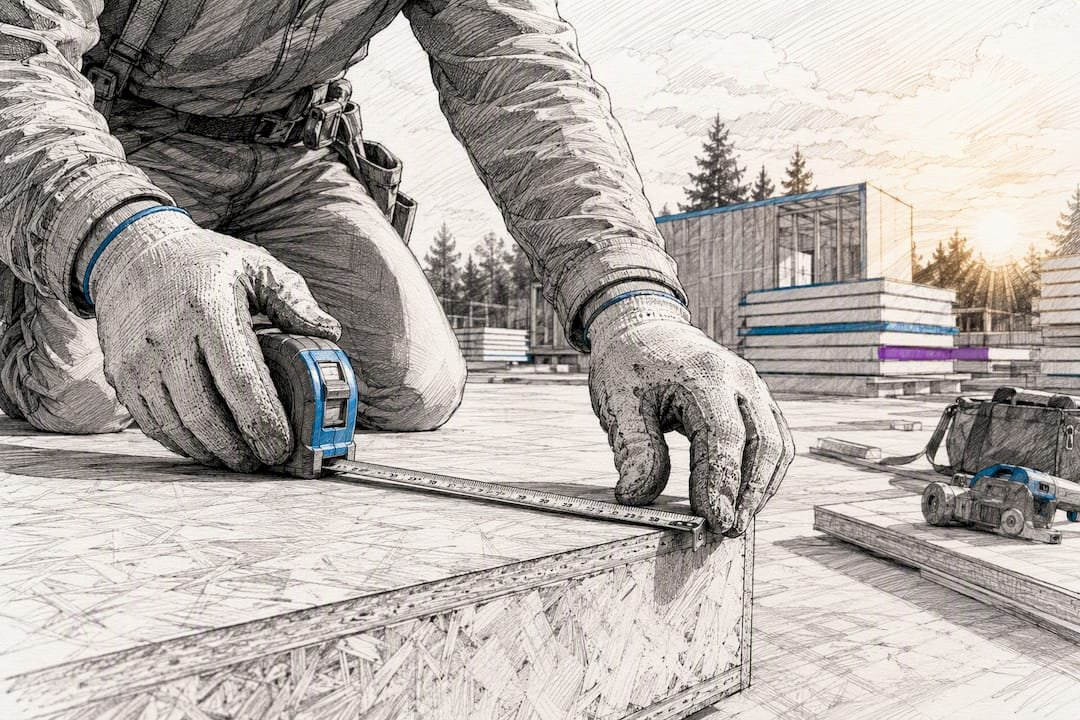
- Measure only after the adjacent panel is set. Panels vary slightly panel to panel, and taking dimensions before the neighboring section is secured compounds small errors into big ones by the time you reach the fourth or fifth cut.
- Mark, clamp, and check orientation. Confirm which side carries electrical chases (usually the bottom) before you cut anything.
- Make the through-cut. Score or cut the OSB skins first. On thicker panels, cut from both sides with the circular saw, or use a beam cutter, then finish the foam core with a hand saw or hot knife.
- Cut spline grooves. Set the depth (commonly around 1.5 inches) and run the groover or router along the line. Square inside corners by hand with a small saw and chisel, since a rounded corner leaves a gap that becomes an air leak later.
- Frame the rough opening. For any wide window or door opening, confirm the engineered header spec with your supplier first. Support the panels on either side of the opening before you cut, then remove foam to the required depth, install the 2x nailers, and seal and fasten according to the panel manufacturer’s spec sheet.
Pro Tip: Dry-fit the spline before you commit to the final groove depth. A test-fit takes two minutes and saves you from re-routing a channel that’s a hair too shallow or too deep for the nailer to sit flush.
Rushing step one is the single most common source of rework on a SIP job. A panel that’s an eighth of an inch off at the start turns into a half-inch gap by panel six.
Which Blade and Technique Give You the Straightest Cut?
The blade matters more than the saw. A carbide-tipped circular saw blade with enough teeth to shear OSB cleanly, rather than tear it, is the difference between a straight edge and a chewed-up one that needs a rasp to fix. Production shops running high volumes often step up to a resaw or bandsaw setup instead of a handheld saw.
- Run the groover or hot knife slow and steady. Rushing the pass tears the foam instead of shaving it, and a torn edge doesn’t seal well against the spline.
- Use the depth gauge on the groover every time, even on repeat cuts. Eyeballing depth is how you end up with a spline that rocks in its channel.
- Ventilate the work area whenever you’re hot-cutting foam. The fumes build up fast in an enclosed space.
- Clamp a straightedge or guide rail to the panel for any cut longer than a couple of feet. Freehanding a 10-foot cut with a circular saw almost never stays straight.
Automated spline cutting equipment like the SCS 1000 delivers far more consistent grooves than a hand-held router pass, which is exactly why manufacturers use it for production runs rather than field crews cutting one panel at a time.
What Can Cutting a SIP Panel Damage Structurally?
Some cuts are routine. Others can quietly compromise the panel’s strength, and you won’t always see the problem until the building is under load.
- Never cut a long horizontal groove into a wall panel facing unless it’s been engineered for that cut. Manufacturers are explicit that this can compromise structural integrity.
- Call your supplier or a structural engineer before cutting into roof or floor skins, or before altering a spline or header layout. SIPs aren’t just foam and OSB; the facings carry real load.
- Wear a respirator rated for foam dust and fumes, plus eye and hearing protection, and run forced ventilation any time a hot knife is in use.
- After any cut, test-fit the spline or nailer, scrape off excess foam, and seal the joint per your supplier’s instructions before moving on.
Pro Tip: Keep your supplier’s tech line saved in your phone before the delivery truck shows up. A five-minute call before a cut is nothing compared to the cost of replacing a panel you cut wrong.
How Do You Keep a SIP Job Site Clean of Foam Waste?
EPS beads travel. A light breeze scatters loose foam across a job site faster than you’d expect, so containment matters as much as the cut itself.
- Work over a tarp and catch chips directly in a bag or tub as you cut.
- Use a groover instead of a rough saw cut when you can. Correct groover technique removes foam in solid strips or chunks rather than loose crumbs, which is both cleaner and easier to recycle.
- Store the recyclable EPS separately from mixed construction debris, and check with your local waste hauler about foam-specific recycling before the job starts.
When Should You Call the Supplier Instead of Cutting It Yourself?
Some jobs are worth handing off, and knowing which ones saves you a costly mistake.
- Any cut through a roof skin, floor skin, or load-bearing header, or one that alters the panel’s spline pattern, warrants a call to your supplier or engineer first.
- If you’re cutting the same groove or opening repeatedly across dozens of panels, factory pre-cutting or an automated spline saw beats field cutting on both accuracy and speed.
- Before you call, have your panel numbers, site photos, drawings, and exact opening dimensions ready. It cuts the back and forth in half.
What I’ve Learned Watching Builders Cut SIPs in the Field
Most of the mistakes I see on SIP jobs happen for the same reason: someone treats a panel like plywood instead of a structural sandwich with a real load path. The panels that go together fastest are the ones where the crew planned openings before the panels ever shipped, not the ones with the sharpest saw on site.
That’s the real case for factory-cut panels. Prefab Modular Home’s structural insulated sandwich panel kits arrive with openings and chases already cut, which strips out the riskiest step in the whole process before a single tool touches the site.
— Kian
Fewer Cuts, Fewer Risks: Build With Factory-Cut Panels
Every technique above works, but every field cut is also a chance to cut through a spline you needed or open a header you didn’t engineer for. Prefabmodularhome takes that risk off the table by shipping panels with openings and chases already routed at the factory, so your crew is assembling instead of guessing at depth gauges and load paths.

Our modular home extension kits come with pre-cut window and door openings built to spec, and our structural insulated sandwich panels are available with custom pre-cuts if your project needs something outside a standard layout. If your build calls for cuts beyond what a groover and circular saw can handle cleanly, a specialist cutting service is worth a call too. Reach out with your panel drawings and opening sizes, and we’ll quote a kit that shows up ready for assembly, not for a saw.
Where to Check the Official Specs Before You Cut

For routing depth and structural limits, review the SIPA installation guidelines and SIPpro’s manual for facing warnings.