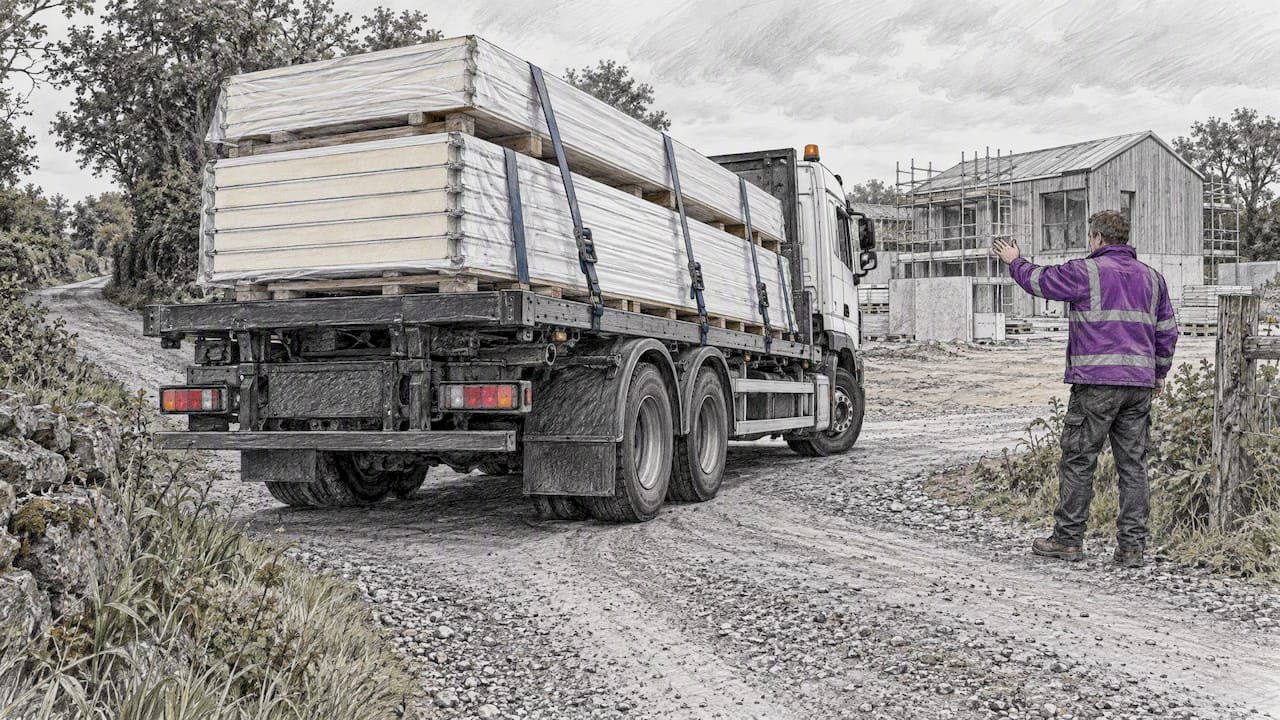
Prefab kit shipping comes in two forms: flat-packed panels that arrive in several loads and need more on-site assembly, or finished modules that travel as oversize single shipments and need heavy-lift placement. Availability depends on your route and site, not on a vendor’s ad copy, and permits, escorts and cranes often add cost and time. Before ordering, ask for an itemized delivered-and-placed quote and the manufacturer’s installation manual.
TL;DR:
- Flat packed panels travel in several loads and need more on site assembly, while finished modules may require permits and crane placement.
- Loads wider than 12 feet or taller than 14 feet can trigger police escorts in some jurisdictions, but route, weight, and local rules also matter.
- A relocation guide estimates moving an existing modular building at $10,000 to $40,000 or more, but that is not a new kit shipping price.
- Request an itemized delivered and placed quote covering freight, permits, escorts, equipment, storage, labor, and site work, since freight alone hides major expenses.
- Before paying a deposit, confirm truck access, legal entry, and room for staging or lifting equipment, then check permits and route limits for your address.
Table of Contents
- How do flat-packed panels and completed modules ship?
- Will a vendor’s “ships nationwide” claim cover your site?
- What size limits trigger permits and escorts?
- What drives shipping and placement costs?
- What does the delivery sequence look like, and how do you prep your site?
- What should you send carriers, and what should the quote show?
- What do kit buyers most often get wrong?
- How we help you get delivery-ready
- FAQ
- Sources
How do flat-packed panels and completed modules ship?
FEMA’s guidance on transportable housing separates panelized components from finished modules, and that split drives almost everything about your delivery.
- Flat-packed panels: Wall and roof panels, trusses, windows and doors travel packed flat, in several truckloads or in containers. Smaller panelized loads may avoid oversize permits.
- Completed modules: Factory-finished units move whole, usually as oversize loads. They may require route permits and heavy-lift placement equipment at the site.
- The trade-off: Panels can reduce oversize and placement costs, but require more on-site assembly. Modules shorten the build but raise freight, permit and crane costs.
HUD’s research notes that panelized kits shrink the size and placement burden compared with completed modules. Our DIY panel kits ship flat, and our build-time guide shows how that affects your on-site days.
Will a vendor’s “ships nationwide” claim cover your site?
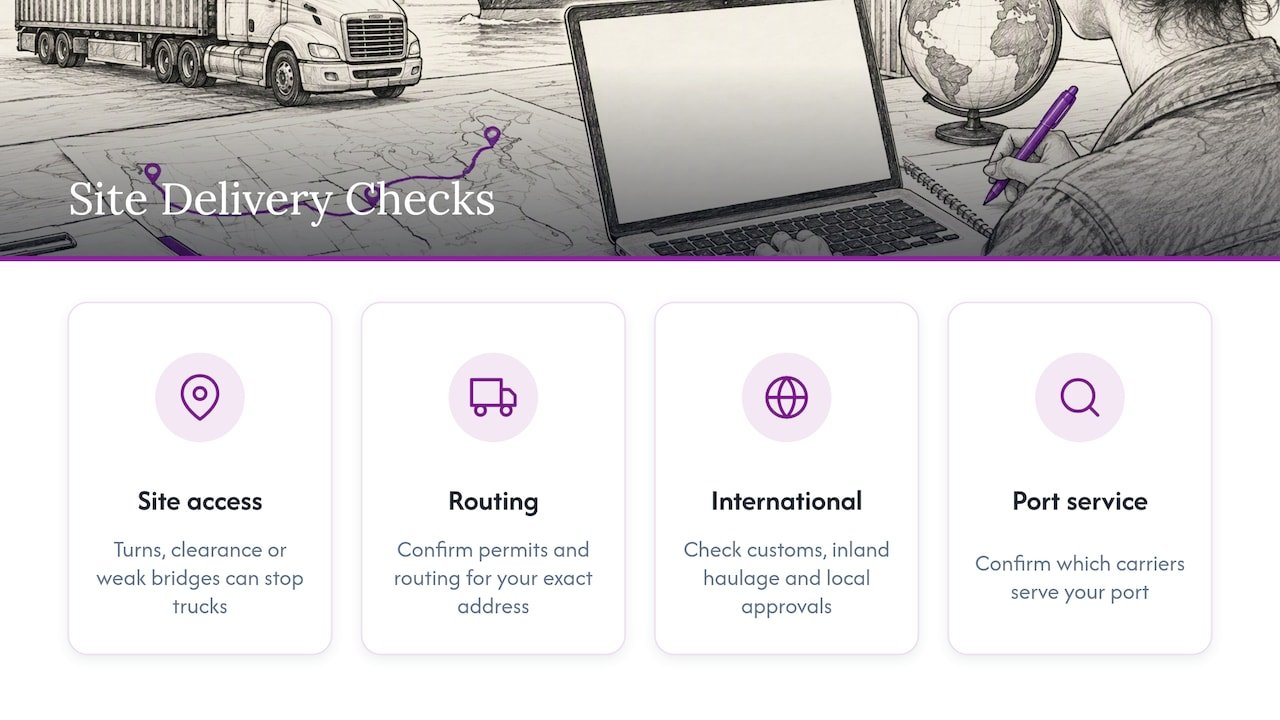
Not by itself. A seller can ship nationwide and still need to confirm permits, carrier routing and last-mile access for your exact address. Operational impossibility can occur even when a shipment is technically deliverable: a tight turning radius, low overhead clearance or a weak bridge can stop a truck.
For international orders, check which shipping, customs, inland-haulage and local-approval arrangements apply at the destination. Confirm which carriers serve your port and who is responsible for any required clearance and inland haulage. If you order a container-style unit, our container delivery requirements page lists what installers confirm before they send a truck.
What size limits trigger permits and escorts?
FEMA’s guidance describes typical truck restrictions of roughly 10–14 feet wide, 60–72 feet long and 14 feet high, and says widths above 12 feet or heights above 14 feet can trigger police escorts in some jurisdictions.
Widths over 12 feet or heights over 14 feet can trigger police escort requirements, and actual limits vary by state, municipality, route and weight.
Dimensions are only the first filter. Bridges, overhead clearances, turning radii, culverts and pavement capacity can force alternate routing or a split load. In the U.S., state law governs maximum transport dimensions, and HUD’s installation rules point buyers to the manufacturer’s installation instructions and local approvals. Ask your carrier how permits are handled state by state, how long they typically take, and whether pilot cars or police escorts are in the quote. Outside the U.S., expect different rules and check them locally.
What drives shipping and placement costs?
A realistic delivered-and-placed quote itemizes these components:
- Freight, by trailer type and distance
- State and local permit fees
- Pilot or escort vehicles
- Crane or forklift placement, including any required rigging support
- Loading and unloading labor
- Temporary storage or consolidation
- Site preparation and foundation work
- Utility hookups
HUD identifies cranes and forklifts as a major placement expense, and there’s no universal shipping price. For scale, one relocation guide puts moving a modular building at roughly $10,000 to $40,000 or more, depending on size, distance, disassembly, permits and installation. That’s a relocation figure, not a price for new kits, but it shows how fast placement costs climb.
Compare total delivered-and-placed cost, not freight alone. Some manufacturers keep modules small enough to avoid permit triggers and use forklifts instead of cranes, so slightly higher freight can still win overall.
What does the delivery sequence look like, and how do you prep your site?
Follow this order:
- Verify product dimensions against the packing list.
- Assess the route and the site.
- Confirm permits, the carrier and the equipment.
- Prepare the foundation, utilities, access and staging area.
- Schedule delivery.
- Inspect everything for damage on arrival.
- Unload or place the components.
- Assemble and connect.
FEMA flags underground utility marking, right-of-entry, site clearance, defects, power hookup and inspections as common delay points. Locate buried utilities, secure legal entry, level a staging area, and make sure a crane pad or forklift path exists. Our site prep guide and foundation guide cover these items in detail. Pre-construction planning also matters: this DC, MD and VA guide explains how permitting and coordination fit together.
If the lot can’t take everything at once, a consolidation center can help. FHWA describes consolidation as short-term storage with coordinated delivery, which suits a kit arriving in multiple loads. It adds handling and storage cost, so it belongs in the quote.
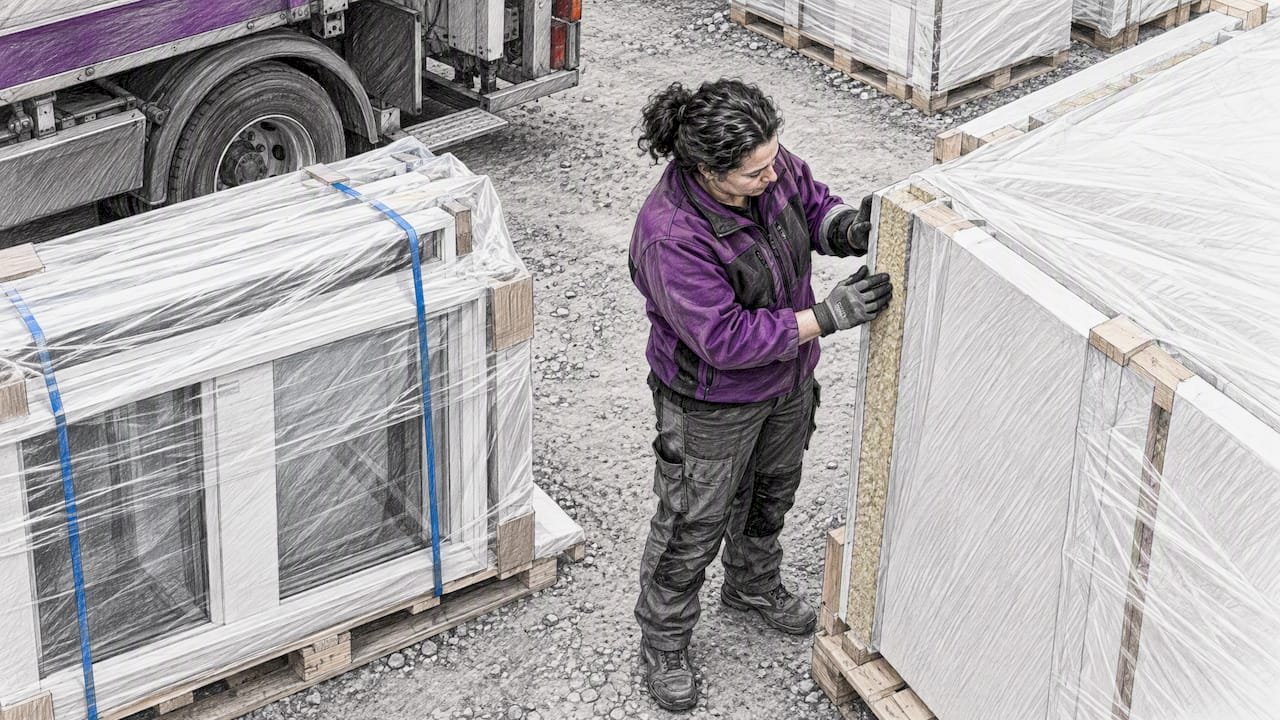
Pro Tip: Inspect fragile items like windows and insulated panel edges before the driver leaves, and note any damage on the delivery receipt. Protecting glazing in transit matters too: these window installation standards are a useful reference.
What should you send carriers, and what should the quote show?
Give every carrier the same inputs so quotes compare cleanly:
- The full packing list with packed dimensions and weights
- Site coordinates and photos of the driveway, turning access and staging area
- Foundation type and readiness date
- Any local time limits or restricted delivery windows
Then ask each carrier to itemize freight, state and local permit fees, pilot or escort costs, crane or forklift fees, storage and consolidation, and expected lead times. Ask for a contingency plan if a route or permit is denied. Offsite Builder’s reporting makes the point that regulations differ between states and cities, so a neighbor’s project can’t stand in for yours.
Settle responsibility in writing: who handles customs for international orders, who pulls permits, and who does the rigging and placement. Heavy-haul guides note that oversize modules need permits, route planning and specialized trailers, so these duties can’t stay vague.
What do kit buyers most often get wrong?
The most common miss is receiving and staging. Buyers order first, then discover the truck can’t reach the lot or nobody has legal right-of-entry. Confirm truck access and entry rights before you pay a deposit. Reserve any crane or forklift and start permits early, and consider short-term consolidation when your lot is tight. Treat the delivery quote as part of the purchase, not an afterthought. A kit that’s easy to assemble still needs a delivery plan and a prepared receiving area. Our site-prep and build-time guides show what a prepared lot and a realistic schedule look like.
— Kian
How we help you get delivery-ready
We supply flat-pack and container-based kits built for fast DIY assembly, and we back them with site-prep resources and build-time estimates. You can ask us for:
- The photo site-prep checklist
Start with our DIY flat pack house kits, browse the full products page, and send us your site details so your quote reflects your route and your lot.
FAQ
How are prefab kits usually shipped?
Prefab kits may arrive as flat-packed panels in several loads or as finished modules in oversize shipments. Panels require more on-site assembly, while modules may require permits and heavy-lift placement.
How much does it cost to ship a prefab kit?
There’s no flat rate, because cost depends on size, distance, permits, escorts and placement equipment. HUD research says no universal shipping price is reliable, so request an itemized delivered-and-placed quote for your exact site.
Do I need a permit for a prefab kit delivery?
It depends on load size and route. Oversize loads often need permits, and wide or tall loads can require escorts, so ask your carrier to confirm requirements state by state.
Can a prefab kit be delivered internationally?
Yes, but it adds container shipping, customs, inland haulage and local approvals. Confirm port access and who handles clearance before you order.
Sources
- Fema
- Huduser
- Primer for Improved Urban Freight Mobility and Delivery: Operations, Logistics, and Technology Strategies – Freight Consolidation – FHWA Office of Operations
- Cost to Move a Modular Building in 2026 | iModular