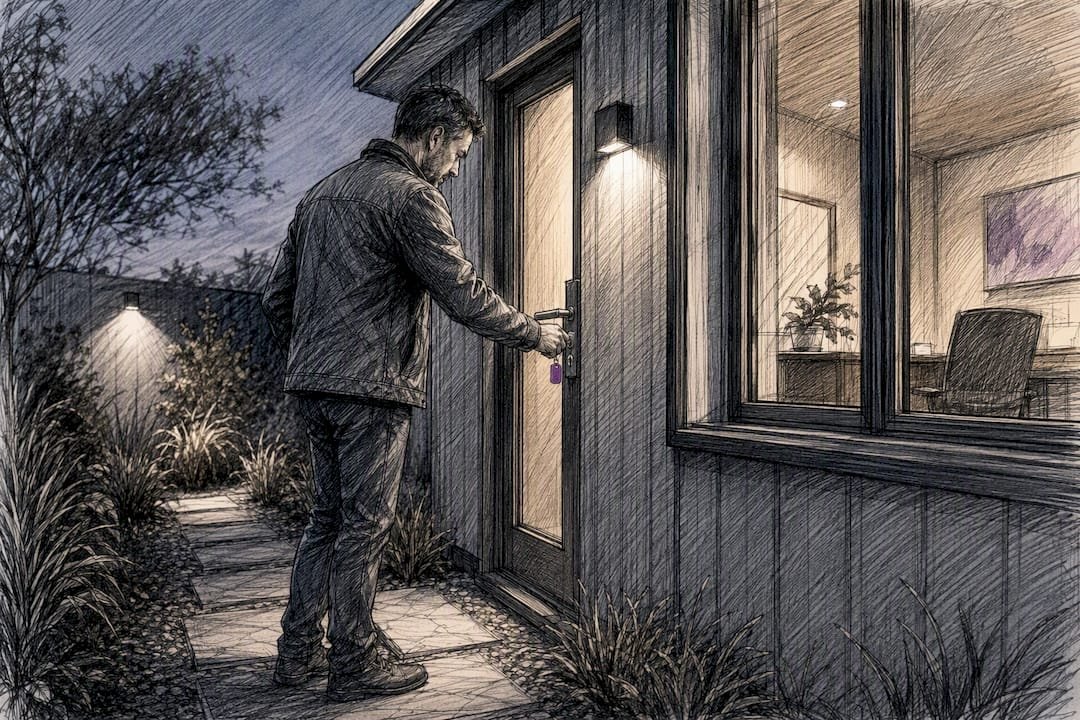
A secure garden office comes down to layers, not gadgets: tested doors and windows anchored properly to the structure, clear sightlines and perimeter controls, then alarms, cameras, and data protection on top. Before anything else, lock away portable equipment, photograph serial numbers, test any existing alarm, and call your insurer to confirm outbuilding cover. For deeper standards, Secured by Design and the UK’s National Protective Security Authority both publish free guidance worth bookmarking.
TL;DR:
- Security-rated doors and windows, including laminated or toughened glass and reinforced frames, are essential to resist forced entry and should meet standards like PAS 24.
- Perimeter defenses such as robust locks, gravel paths, thorny plants, and strategic lighting or cameras that cover the most likely access routes deter opportunist thieves effectively.
- Mechanical locks with anti-snap features and multi-point mechanisms remain more reliable than smart locks alone, which require regular maintenance and backup overrides.
- Alarm systems paired with cameras that cover approach routes, local storage, and backup power, combined with regular testing, create a layered security approach that adapts to various threats.
- Planning for security during the initial setup of a prefab garden office, including specifying tested door and window options and routing cables before assembly, reduces retrofit costs and weaknesses.
Table of Contents
- How Do You Make Doors and Windows Resist Forced Entry?
- What Perimeter Setup Deters Someone Before They Reach the Office?
- Which Locks and Access Systems Actually Hold Up?
- What Alarm, Camera, and Lighting Setup Actually Works?
- How Do You Protect Equipment and Data If Someone Gets In?
- What Should You Confirm With Your Insurer Before You Furnish the Office?
- How Do You Build Security Into a Prefab Garden Office From the Start?
- Should You Add a Safe or Lockable Cabinet Inside the Office?
- What’s Your Emergency Plan If a Break-In Happens?
- Do Warning Signs and Stickers Actually Stop Break-Ins?
- Keep It Layered, Practical, and Tested
- How Prefabmodularhome Helps You Build Security In From Day One
- Where to Read More on Garden Office Security
- Sources
- FAQ
How Do You Make Doors and Windows Resist Forced Entry?
Most garden office break ins happen at the door or window frame, not through the wall panels themselves. That’s where your attention needs to go first.
Ask your supplier whether the doorset and windows carry a real security rating, such as PAS 24 in the UK or an equivalent local standard, rather than just a “security lock” label. A tested doorset performs as a whole assembly, and a strong cylinder on a weakly fixed frame gives you very little real protection.
Inspect the entire doorset, not just the lock:
- Reinforce the frame itself, not only the strike area.
- Protect exposed hinges with hinge bolts so the door can’t be levered off from the hinge side.
- Fit security screws at least 70mm long into solid timber or masonry, not just the factory fixings.
- Upgrade to a reinforced strike plate that spreads load across the frame.
For glazing, laminated or toughened glass beats standard panes for delaying an attacker, and security film adds a cheap second layer to existing windows. Internally beaded units are worth requesting specifically, since external beading can be popped out from the outside to release the glass. Multi-point locking handles and secondary hinge bolts round out a solid retrofit.
Pro Tip: Ask your window supplier which specific test the glazing passed and how the beading is fitted. “Security glass” without those two answers usually means the marketing got ahead of the product.
What Perimeter Setup Deters Someone Before They Reach the Office?
Opportunist theft is the most common risk to a garden office, and opportunists avoid anything that looks slow, loud, or visible. A practical sequence works best: secure the boundary first, then build visibility, then harden the structure itself.
- Position or angle the office so it’s visible from the house, or add a sightline window or camera if that’s not possible.
- Fit robust locks on gates and fences, and add anti-climb measures like trellis toppers on vulnerable boundary sections.
- Lay gravel on approach paths. It’s cheap, and it’s genuinely loud underfoot at night.
- Plant dense, thorny species along fence lines to slow access, but keep them trimmed low enough that they don’t create hiding spots.
- Walk the garden and map the two or three most likely approach routes, then put your lighting and cameras where those routes actually are, not just where it’s convenient to mount them.
Which Locks and Access Systems Actually Hold Up?
Mechanical locks still matter more than most smart-lock marketing suggests. Look for insurance-approved cylinders with anti-snap and anti-drill features, paired with a multi-point locking mechanism rather than a single deadbolt.
Smart locks add real convenience: revocable codes, temporary access for a cleaner or contractor, and a log of who came and went. The tradeoff is dependency on batteries and network connectivity, so keep a secure mechanical override and check the battery status monthly rather than waiting for a lockout.
- Issue unique codes per person and set expiry dates on temporary ones.
- Turn on two-factor confirmation if your lock supports it.
- Audit active credentials every few months and remove anyone who no longer needs access.
- Anchor strike plates and hinges into solid substrate. Screws into thin trim or panel facing alone won’t hold under force.
Pro Tip: Write down your smart lock’s manual override procedure and store it somewhere other than inside the office you’re trying to get into.
What Alarm, Camera, and Lighting Setup Actually Works?
An audible alarm paired with phone alerts covers the basics. Professional monitoring, where budget allows, adds a real advantage: someone responds even if you’re asleep or away.
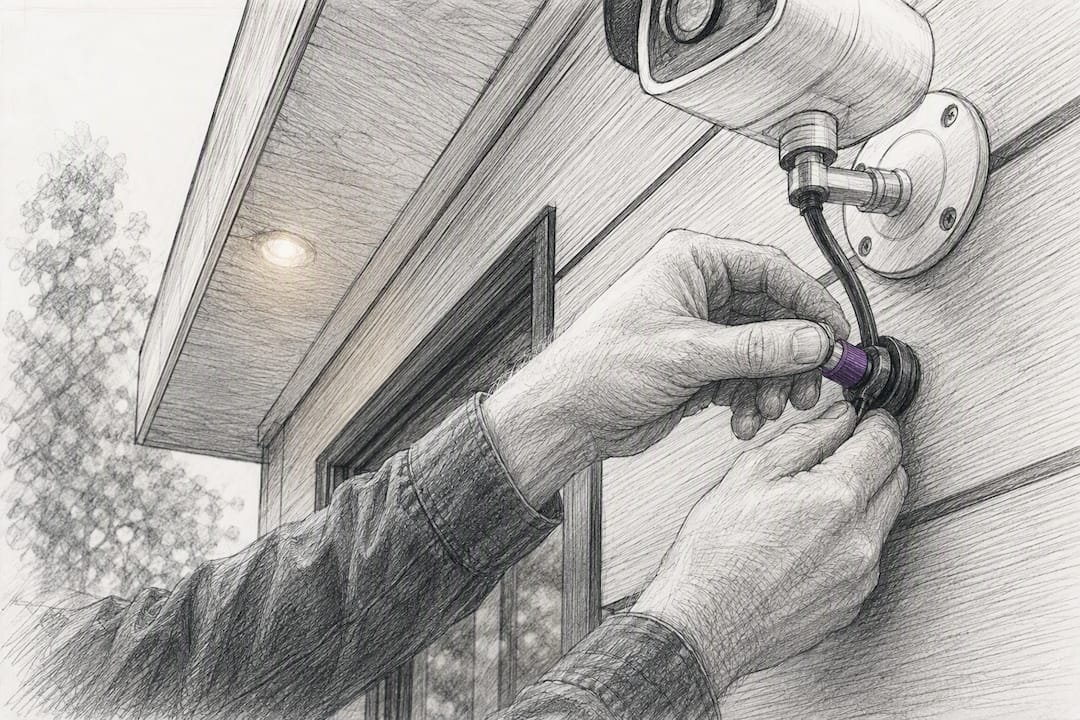
Camera placement is where most setups go wrong. Cameras need to cover approach routes and the actual entry points, not just the front door from a flattering angle. Avoid pointing a camera into direct backlighting from a streetlamp or the house, since that washes out the footage exactly when you need it. Position units high enough and shrouded enough to resist tampering.
- Confirm the camera can identify a face or vehicle at night, not just detect motion.
- Add local storage plus cloud backup, or a cellular failover, so footage survives someone cutting power or Wi-Fi.
- Check your provider’s retention window and any local recording or privacy rules before you install.
- Choose motion lights with adjustable PIR sensitivity so you’re not chasing false triggers from next door’s cat.
A layered approach that includes maintenance and testing beats any single high-end device, because systems that aren’t tested tend to fail exactly when they’re needed. Run a full test of alarms and cameras every quarter, not just after installation.
If your camera relies on Wi-Fi that drops out at the bottom of the garden, a hardwired connection solves more security problems than any camera upgrade will.
How Do You Protect Equipment and Data If Someone Gets In?
Physical security and data security are the same problem now, not two separate ones. A stolen laptop is a burglary and a data breach at once, especially for remote workers handling client files.
- Never leave laptops, tablets, or external drives in the office overnight. Bring them into the house or lock them in an anchored safe.
- Turn on full-disk encryption, set the screen to auto-lock within a minute or two of inactivity, and use strong multi-factor authentication on anything work related.
- Separate your home network into main, guest, and IoT segments, use WPA3 or WPA2-AES encryption, keep the router firewall on, and run a VPN for sensitive work traffic.
- Log every device’s serial number and a photo, and consider forensic marking or etching on higher-value gear.
Telework setups carry risks that traditional home offices don’t: unsecured networks, lost devices, and infected equipment all compound each other once a garden office is involved. Treat the two threats together rather than bolting on cybersecurity as an afterthought.
What Should You Confirm With Your Insurer Before You Furnish the Office?
Standard household policies frequently exclude or limit cover for outbuildings, and business equipment kept there often needs its own line of cover entirely. Before storing work gear in a garden office, get the exact wording from your insurer in writing rather than assuming it’s included.
- Ask specifically whether the outbuilding is covered and whether business equipment needs a separate policy or rider.
- Photograph valuables and installed security features with a timestamp, and record every serial number.
- Keep receipts and invoices in a separate location from the office itself, ideally scanned and backed up.
- Schedule annual checks on alarm batteries, camera mounts, and door and window fixings, since beading and hinges loosen with weather cycling.
If a theft does happen, preserve footage and timestamps immediately, and submit your inventory and installation records to the insurer as early as possible in the claim.
How Do You Build Security Into a Prefab Garden Office From the Start?
Retrofitting security into a finished panel building is harder and messier than planning for it up front, as explained in how to redefine your open space and create a private office without losing the open feel. Security decisions made before assembly save you from drilling into finished walls later.
- Specify a tested door and window package at order stage, and confirm exactly how it’s fixed to the panel or substrate.
- Plan cable routes for alarms and cameras before panels close, since running new conduit through a finished sandwich panel risks weakening the joint.
- Request documented fixing details and frame-connection specs from your supplier in writing, not just a verbal assurance.
- Bring in a qualified electrician or security installer for any wiring work where local codes require licensed installation.
Pro Tip: If you’re ordering a modular backyard office, ask for the anchoring and cable-routing plan before the kit ships. It’s a five-minute conversation that saves a weekend of retrofitting.
Should You Add a Safe or Lockable Cabinet Inside the Office?
Yes, and it’s one of the cheapest upgrades on this list relative to what it protects. Even with a strong door and decent locks, a determined intruder who gets inside still needs a second obstacle between them and your laptop, camera gear, or paperwork.
A anchored safe, bolted through its base into a solid floor point rather than just sitting on the floor, stops a smash-and-grab from turning into a total loss. Choose one rated for the value of what you’re storing, since a light fire-only safe won’t stop a crowbar. For everyday items like a spare laptop, external drives, or client documents, a lockable steel cabinet is often more practical day to day than a full safe, since you’re in and out of it constantly.
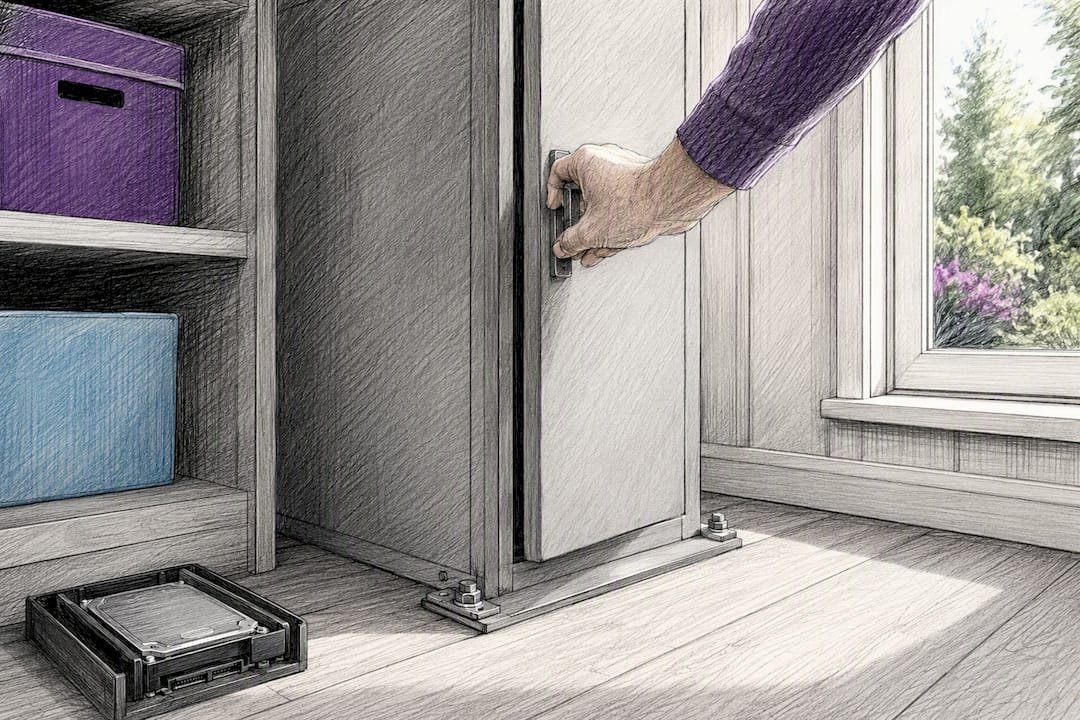
Position the cabinet or safe away from windows, so it isn’t visible the moment someone looks through the glass. If your office has a desk built into the layout, a locking drawer unit under it adds a low-friction habit: valuables go in the drawer the moment you step away, not just at the end of the day.
None of this replaces the perimeter and door work covered earlier. It’s the layer that catches what gets through if the first line fails, and insurers increasingly ask whether valuables were secured in a locked container when assessing a claim.
What’s Your Emergency Plan If a Break-In Happens?
A security setup without a response plan just delays the inevitable confusion when something actually goes wrong. Write the plan down before you need it, not while you’re standing in a damaged doorway at 11 p.m.
Decide in advance who gets called first. For an active break-in or someone still on the property, that’s emergency services, not your insurer. Once the scene is safe, the order shifts: photograph everything before touching it, note the time you discovered the break-in, and pull any camera footage before it gets overwritten by your storage retention cycle.
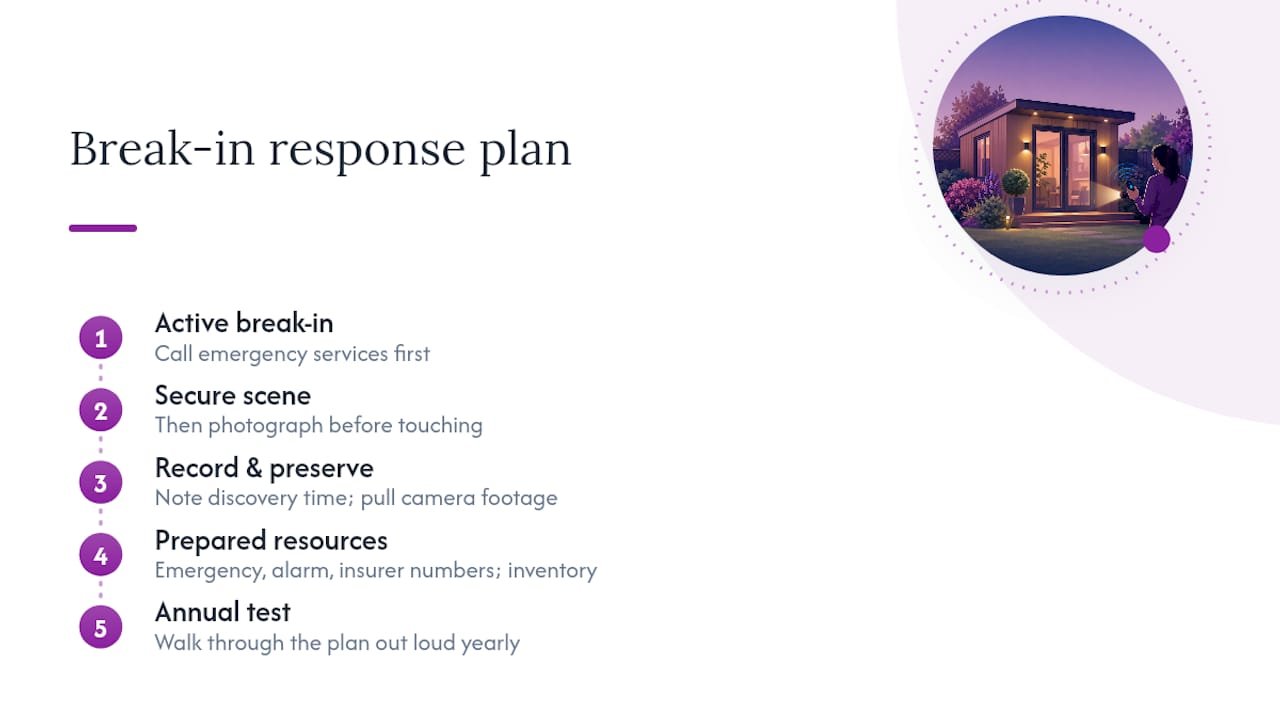
Keep a simple written protocol taped inside a kitchen cabinet or saved in a shared family document: emergency number, your alarm monitoring company’s contact if you have one, your insurer’s claims line, and the location of your equipment inventory and photos. If you share the office with a partner or housemate, make sure they know the same steps, since you won’t always be the one who finds the damage.
Test the plan the same way you test the alarm. Once a year, walk through it out loud with anyone else who uses the space. A plan nobody remembers under stress isn’t much better than no plan at all.
Do Warning Signs and Stickers Actually Stop Break-Ins?
They help more than most people expect, and they cost almost nothing. Visible signage signals that entry will be difficult, loud, or recorded, and opportunist thieves are specifically looking for the easiest target on the street, not a challenge.
A sticker on the door or window referencing an alarm system or camera monitoring creates doubt before anyone tries the handle. Even a generic “CCTV in operation” sign does real work if it’s paired with an actual camera, since bluffing without backup rarely survives a second look from someone who’s cased the property before. Place signage where it’s seen from the approach path, not tucked behind a plant where nobody notices it until they’re already at the door.
Pair signage with visible hardware: a camera mounted where it can be seen, a lock plate that looks substantial, lighting that’s obviously motion activated. The goal isn’t to hide your security, it’s to advertise it. A garden office that looks like a soft target invites exactly the kind of casual, opportunist attempt that’s most common in the first place.
Keep It Layered, Practical, and Tested
If something can be carried off in under a minute, it will be. Delay and visibility beat any single device, which is why doors, sightlines, and testing matter more than the newest camera on the shelf. Start with the frame and glass, document everything, and check your alarm and policy every year, not just once.
— Kian
How Prefabmodularhome Helps You Build Security In From Day One
Retrofitting a doorset, running new cable for a camera, or reinforcing a frame after the panels are closed almost always costs more than planning for it at order stage. Some prefab modular home kits let you specify stronger doorset options, plan anchoring, and route alarm or camera cabling before assembly instead of drilling into finished insulated panels afterward.
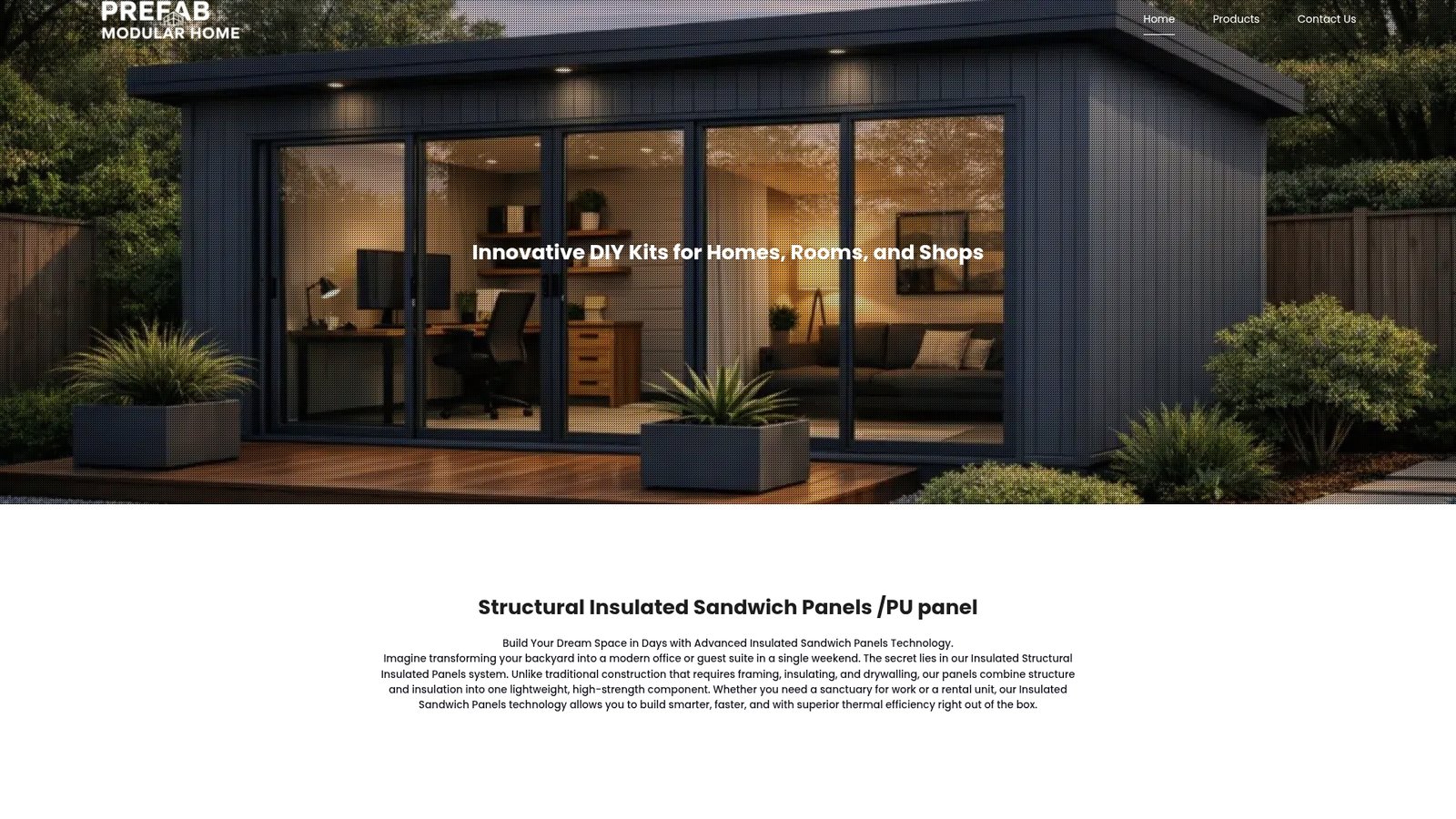
That’s the practical advantage of building security into the design rather than bolting it on later: the fixing points, the door strength, and the cable paths are decided once, correctly, instead of patched together over a weekend. Browse the full product catalog to see the DIY kit, container office, and container home options, or check the sandwich panel specifications if you want to understand how the panels affect fixing and anchoring choices before you order. Get in touch through the site if you want more information about security details before you commit to a kit.
Where to Read More on Garden Office Security
For deeper reading beyond this checklist, Secured by Design’s garden security guidance covers boundary and structural security in more depth, while the NPSA’s window assessment document gets technical on glazing and hinge vulnerabilities. If your work involves remote access to sensitive systems, NIST’s telework security guidance is worth a full read. Always check your local equivalent of PAS 24 certification, since standards vary by country.
Sources
- Secured by Design — Garden security advice
- NPSA — Assessment of security afforded by domestic windows
- NIST SP 800-114 Rev.1: User’s Guide to Telework and BYOD Security
FAQ
How Do I Deter Thieves From Targeting My Garden Office?
Make entry slow, loud, and visible: gravel on approach paths, a reinforced doorset, motion lighting, and clear sightlines from the house all raise the effort required. Opportunist theft is the dominant everyday risk, so visible deterrents like signage and cameras often do more work than a single expensive lock.
What’s the Best Security System for a Garden Office?
There’s no single “best” system. The most effective setup pairs an audible alarm with phone alerts, cameras covering the actual approach routes and entry points, and motion-activated lighting, backed by tested doors and windows so the alarm has time to matter before someone gets through.
Is a Garden Office a Good Idea Security-Wise?
Yes, provided you plan security at the same stage you plan layout and insulation. Prefab kits like those from Prefabmodularhome let you specify a tested doorset, plan anchoring, and route camera or alarm cabling before assembly, which avoids the retrofit weaknesses that make many garden buildings easier targets than the main house.
What’s the Best Outdoor Alarm System for a Garden Office?
Look for a system that combines audible alerts with app notifications and, ideally, professional monitoring if your budget allows it. Pair it with cameras that offer local storage plus cloud or cellular backup, since footage needs to survive an intruder cutting power or Wi-Fi.
Do I Need Separate Insurance for a Garden Office?
Often, yes. Household policies frequently treat outbuilding theft differently from theft inside the main house, and work equipment stored in a garden office may need its own cover. Confirm the exact wording with your insurer and keep serial numbers, photos, and receipts on file before anything goes wrong.