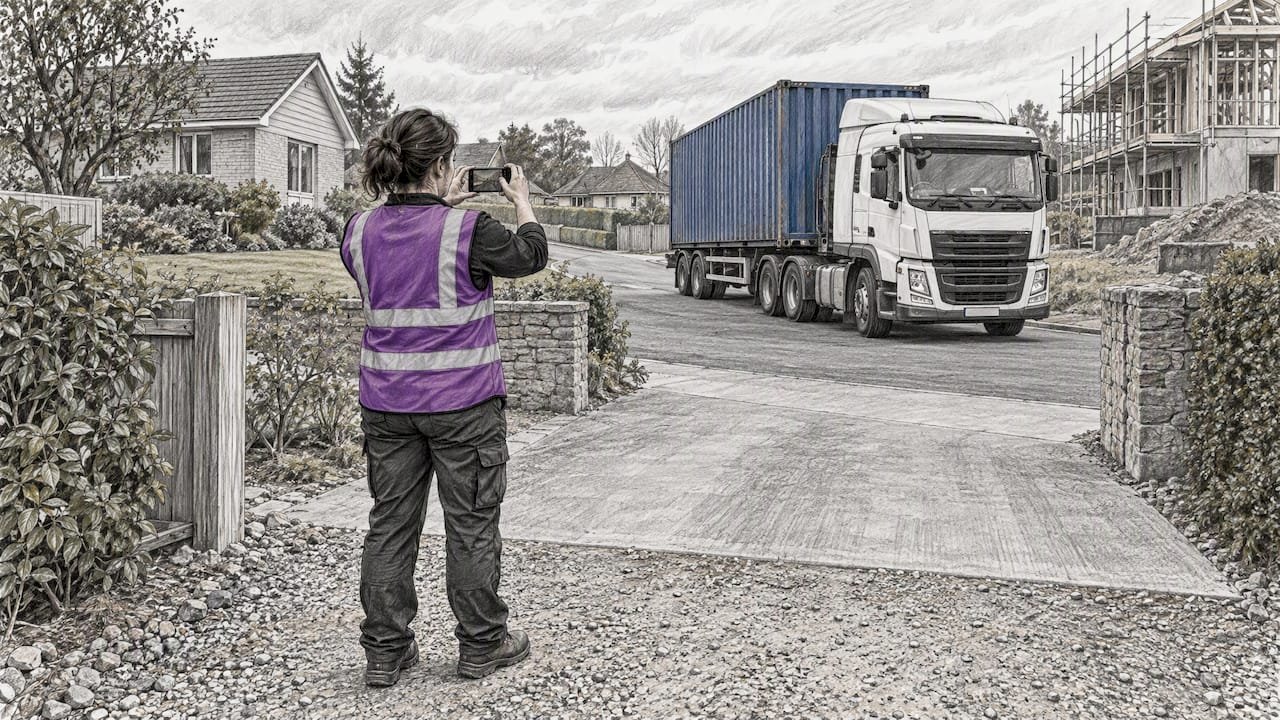
A smooth container delivery depends on three things: a straight, clear approach of at least 60 feet for a 20ft container (and often 110 to 130 feet for a 40ft unit), a landing surface rated for the load, and a confirmed delivery method with driver contact in hand. Skip any one of these and you risk a refused delivery, a rescheduling fee, or a truck stuck in your yard.
TL;DR:
- Tilt bed and roll off trucks need a long, straight approach; crane or forklift deliveries need side clearance, while level lift systems need overhead room.
- Soft ground, tight turns, and steep grades can stop a loaded truck; consider street staging or temporary road plates when access or driveway strength is uncertain.
- For road transport, the truck, trailer, container, and cargo must stay within the 80,000 pound gross limit; a 40 foot load is typically limited to 44,000–48,000 pounds.
- Inspect the roof, corner castings, seals, and floor before the driver leaves; photograph damage with paperwork visible and record defects on the receipt before signing.
- Keep people and pets at least 20 feet from unloading equipment, and never stand between the container and a fixed object or try to steady a suspended load.
Table of Contents
- Site Space Requirements: Clearance, Width, and Height
- Access and Road Requirements: What Roads and Surfaces Block Delivery
- Ground and Foundation: Preparing the Landing Surface
- Delivery Methods and Vehicle Requirements
- Permit and Regulatory Essentials Before Your Delivery
- Site Prep Checklist for the 24 to 72 Hours Before Delivery
- Handling Damaged or Delayed Container Deliveries
- Safety Protocols During Container Delivery and Unloading
- Communication and Coordination With Delivery Personnel
- What Experience Teaches About Container Delivery Day
- How We Support Site Prep for Container-Based Builds
- FAQ
- Sources
Site Space Requirements: Clearance, Width, and Height
Most carriers need a straight shot to the placement spot, not a winding path. A 20ft container typically needs around 60 feet of unobstructed approach, while a 40ft delivery often calls for 110 to 130 feet depending on the truck and trailer configuration, since longer rigs need more room to straighten out before backing or tilting into place. These figures shift with the hauler’s equipment, so always confirm the number with your specific carrier rather than assuming a default.
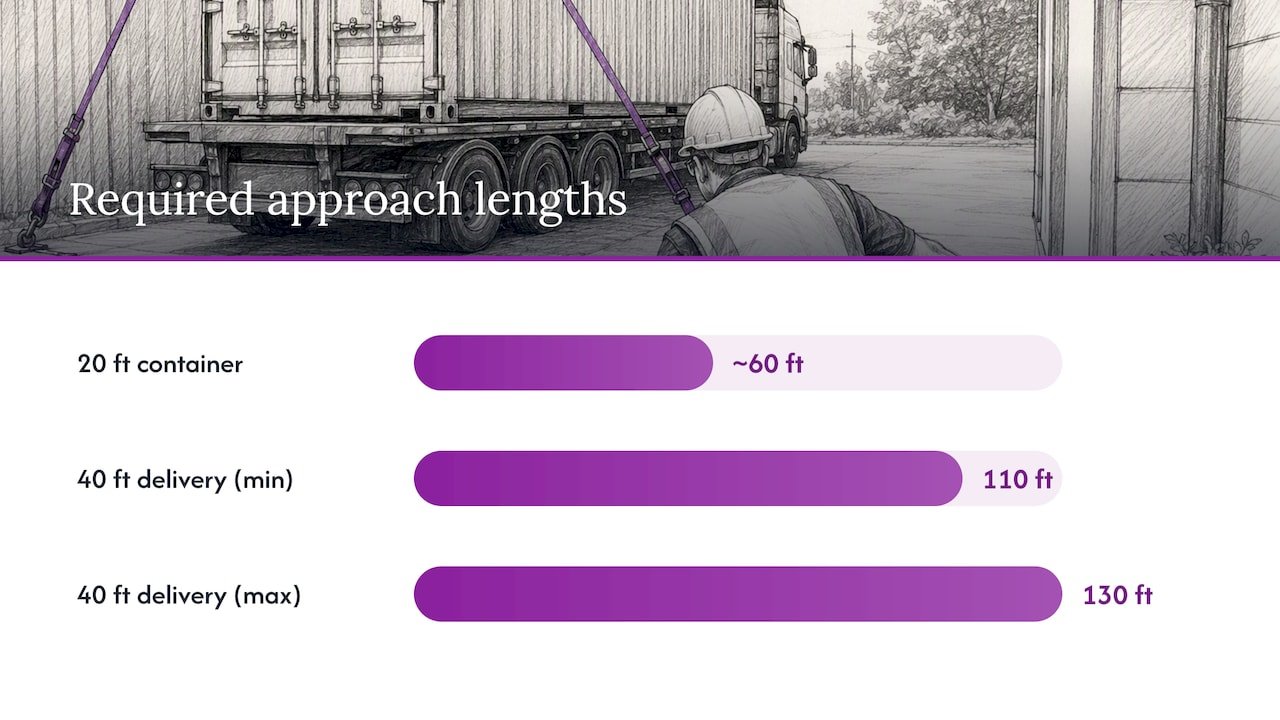
Approach space is different from your final footprint. The approach is the lane the truck and trailer travel to get into position; the footprint is just the container’s own length and width once it’s set down. You need both measured separately, because a driveway that fits the container might still be too narrow for the delivery vehicle to turn into it.
To check vertical clearance, measure from the ground to the lowest point of any tree limb, eave, wire, or carport roof along the entire path, not just at the final spot.
- Measure straight-line distance from the street or staging area to the placement spot.
- Check width at the narrowest point, including gates, fences, and parked cars.
- Measure height clearance under every tree branch, power line, and roof overhang along the route.
- Add a 1 to 2 foot safety margin on every dimension before confirming the site.
Pro Tip: Use a long tape measure and a phone level app together. The tape gives you distance, the level helps you spot a slope that could eat into your clearance margin before the truck ever shows up.
Access and Road Requirements: What Roads and Surfaces Block Delivery
Dirt paths, soft shoulders, and narrow lanes cause a large share of refused deliveries. A loaded delivery truck is heavy, and a surface that feels firm under a car can rut or sink under a tandem-axle trailer, leaving the driver unwilling to proceed.
Turning radius matters as much as surface. Before booking, walk the route and note any turn tighter than a standard driveway corner, and check for grades steeper than a gentle slope, since a loaded trailer can lose traction or drag on a steep rise. When your own property can’t accommodate the turn, ask whether staging on the street, a neighbor’s lot, or a nearby rental parking area is an option.
Overhead obstacles deserve the same scrutiny as the road surface itself.
- Flag any tree limbs, awnings, or carports lower than your container’s height plus a safety margin.
- Note low bridges or narrow underpasses on the route leading to your property.
- Identify utility lines that cross the driveway or approach path.
Pro Tip: Call your local utility before delivery day if a line crosses your approach. Rescheduling for a line that could have been flagged in advance costs far more than a five-minute phone call.
Ground and Foundation: Preparing the Landing Surface
An uneven landing surface causes doors to bind and containers to twist slightly over time, which shows up as sticking doors or gaps at the corners. Check level with a long, straight board and a level, or a laser level for larger pads, and aim for as close to flat as you can manage across the entire footprint.
Support choices depend on how long the container will stay in place and what it will be used for.
- Pressure-treated sleepers work well for short-term placement and allow airflow underneath.
- A compacted gravel pad suits most home or office setups and drains well in wet climates.
- Concrete piers at the four corners suit permanent, habitable installations.
- Cinder blocks offer a quick, low-cost option for temporary staging.
Driveway strength matters just as much as the final landing spot, since the delivery vehicle itself often weighs more than the container it carries. A standard residential driveway handles passenger cars fine but can crack or settle under a loaded delivery truck’s axle weight. When you’re unsure whether your driveway or access road can take that load, a site visit from a paving contractor or the use of temporary road plates is worth the cost compared to a damaged driveway or a truck that can’t get traction.
Pro Tip: Elevating all four corners with sleepers or piers, even for a short-term placement, helps air circulate underneath and cuts down on condensation-related rust over time.
Delivery Methods and Vehicle Requirements
The delivery method your carrier uses determines how much maneuvering room you actually need, so confirming it ahead of time lets you adjust your site prep accordingly.
- Roll-off and tilt-bed trucks tilt the truck bed and slide or roll the container off, requiring a long, straight approach but less overhead clearance.
- Flatbed delivery with a crane or forklift lifts the container off the trailer, needing extra side clearance for the lifting equipment but less straight-line backing distance.
- Level-lift systems raise and lower the container with minimal ground maneuvering, but they need a clear vertical envelope above and around the unit during the lift.
Most drivers are on-site under an hour when the approach and landing area are ready and clear. Complications like soft ground, blocked paths, or missing paperwork are what stretch that time. Sending the carrier photos of your approach, or a simple hand-drawn site map, before booking speeds up dispatch of the right vehicle and cuts down on surprises on delivery day.
Permit and Regulatory Essentials Before Your Delivery
Federal law caps gross vehicle weight for road transport at 80,000 pounds, which in practice limits the cargo a truck can legally carry inside a 40ft container to a range somewhat below that, once the weight of the truck, trailer, and container itself is accounted for, according to the Federal Highway Administration. If your container is loaded with heavy materials before transport, this cap can determine whether the load is legal to move at all.
U.S. law also places duties on shippers and carriers around weight certification, including prohibitions against coercing a carrier to move an overweight load and notice obligations when legal limits are exceeded, under 49 USC §5903.
- Containers must carry a valid safety approval plate under the International Convention for Safe Containers, and carriers can refuse an unplated or poorly maintained unit.
- The SOLAS Verified Gross Mass rule, in force since July 1, 2016, requires a packed container’s verified gross mass before it can be loaded onto a ship, though this applies to ocean freight rather than most domestic ground deliveries.
- Local oversize or overweight permits may be required for wide loads or heavy routes, and the carrier typically arranges these as part of scheduling.
Site Prep Checklist for the 24 to 72 Hours Before Delivery
Working through these steps in order in the days before delivery cuts down on rescheduling and avoids last-minute surprises for both you and the driver.
- Measure and photograph the full approach path and the final placement area.
- Label any overhead obstacles and note their height above the ground.
- Mark the exact placement spot on the ground and decide on door orientation.
- Clear low branches, move parked vehicles, and relocate hoses or sprinklers from the path.
- Confirm the delivery method, get the driver’s direct contact, and verify any required permits or VGM documentation are in place.
Our site-prep resource walks through photo verification step by step if you want a second check before the truck arrives.
Handling Damaged or Delayed Container Deliveries
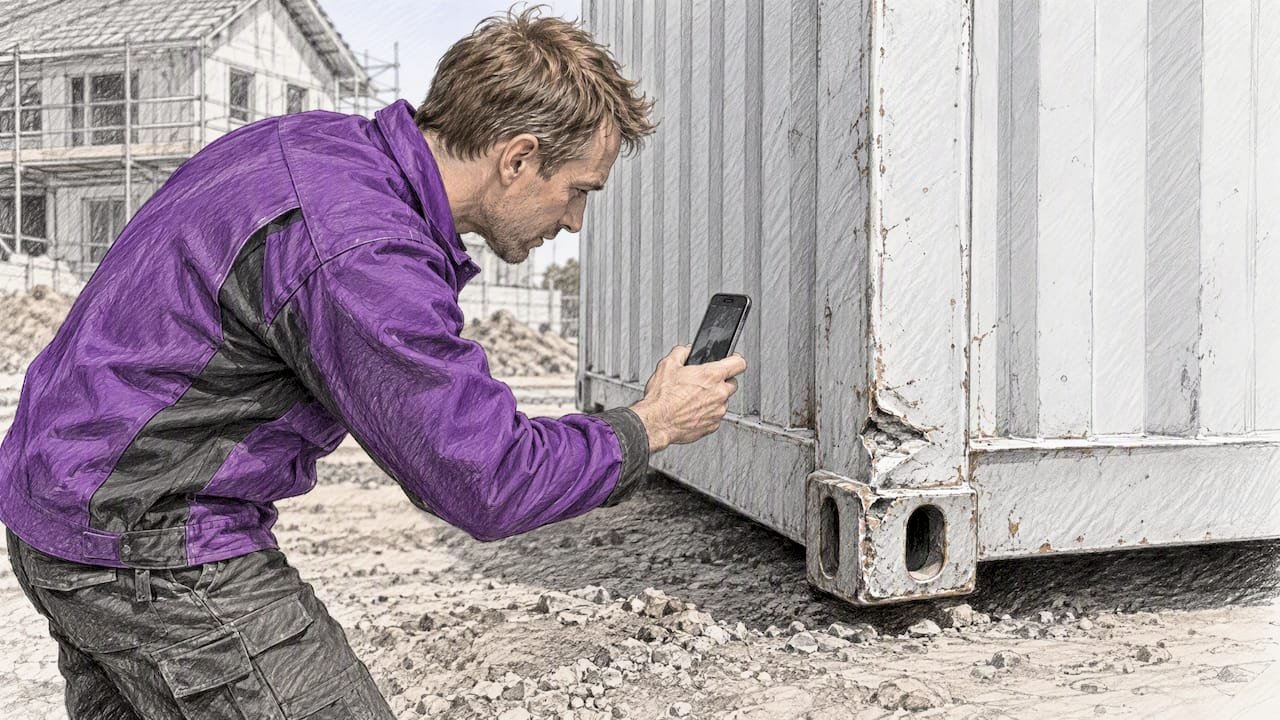
Inspect the container immediately on arrival, before the driver leaves, checking the roof, corner castings, door seals, and floor for dents, rust-through, or warping. Photograph any damage from multiple angles with the delivery paperwork visible in frame, and note the issue on the delivery receipt before signing, since a signature without noted exceptions can make a damage claim harder to pursue later.
Delays are usually caused by paperwork gaps, an approach that turned out narrower than described, or ground too soft to support the vehicle. If your delivery is running late, contact the carrier’s dispatch line rather than waiting, since many delays are resolved same-day once the carrier knows about a site issue.
When a container arrives with structural damage, such as a bent frame or compromised corner casting, hold off on using it as a finished structure until the supplier or carrier confirms whether it’s still sound. A dented wall panel is usually cosmetic, but a twisted frame can affect how doors seal and how the unit handles weight if you’re building it out as livable space.
Keep every photo, email, and signed delivery note until the container is fully inspected and accepted. If you’re having a container finished into a home, office, or shop afterward, these records also help your kit supplier troubleshoot any fit issues tied to delivery rather than assembly.
Safety Protocols During Container Delivery and Unloading
Keep everyone, including children and pets, at least 20 feet back from the truck and container during unloading, since tilt-beds, cranes, and level-lift arms all move through a wide arc that isn’t always obvious until the equipment is already in motion.
Walk the site with the driver before unloading begins so you both agree on the exact placement spot and door orientation, since repositioning a container after it’s set down is far harder than adjusting the plan beforehand. Make sure the driver has a clear, unobstructed view of the landing zone, with no hoses, toys, or tools left in the path.
Never stand between the container and any fixed structure, fence, or vehicle during the final lowering, and never attempt to guide or steady the container by hand once it’s suspended or sliding off the trailer. If the delivery involves a crane or level-lift arm, stay clear of the entire swing radius, not just the area directly under the load.
Wear closed-toe shoes and, if you’re helping direct the driver, a high-visibility vest if you have one. Once the container is set, let it sit undisturbed for a few minutes before approaching, since trucks sometimes need to adjust position slightly after the initial placement.
Communication and Coordination With Delivery Personnel
Share your measurements, photos, and any flagged obstacles with the carrier before delivery day, not after the truck is already en route. A dispatcher who knows about a tight turn or a low branch in advance can send a smaller truck or a driver experienced with that kind of site.
Get a direct phone number for the driver or dispatcher, not just a general office line, so you can reach someone quickly if conditions change, like a sudden rainstorm that softens your landing area. Confirm the delivery window the morning of, since trucks can run early or late depending on earlier stops.
On delivery day, be present or have someone on-site who can make placement decisions, since the driver will often ask for confirmation on exact positioning and door orientation before setting the container down. If you’re coordinating remotely, a simple site map with the placement spot and door direction marked saves time and avoids miscommunication.
What Experience Teaches About Container Delivery Day
Wet ground after rain and clearances measured a week too early are the most common last-minute problems. Recheck both the day before delivery. A few scrap boards under wheel paths can rescue a soft spot, and a fresh photo of the approach catches a parked car or trimmed branch nobody mentioned.
— Kian
How We Support Site Prep for Container-Based Builds
Once your container arrives and passes inspection, turning it into a finished space is where we come in. We offer ready-to-use container homes and container offices built with structural insulated sandwich panels, designed so you can finish the interior in days rather than months, without needing special construction skills or heavy tools.

We also provide photo-verified site-prep guidance that lines up with the clearance, leveling, and access requirements covered above, so your prep work matches what your container build actually needs once it lands.
- Browse our full product catalog for container homes, offices, shops, and insulated panel kits.
- Review our construction site container office planning guide for placement and permitting pointers specific to work-site deliveries.
- Check interior finishing options if you’re planning to convert your delivered container into livable or working space.
If your site needs grading, gravel, or vegetation cleared before delivery, a land-clearing and driveway prep service like Tri-State Brush and Gravel can reinforce your approach ahead of time. Start with our products page to see which container or panel kit fits your project.
FAQ
Do you need a CDL to transport shipping containers?
Driving a truck loaded with a shipping container typically requires a commercial driver’s license when the combined vehicle and cargo weight exceeds the federal threshold for commercial vehicles. Most container delivery trucks fall well above that threshold, so the carrier’s driver holds a CDL as a standard requirement of the job.
What is not allowed in a shipping container?
Hazardous materials, flammable liquids, and certain regulated chemicals generally require special permits, placarding, or outright prohibition depending on the shipping route and carrier policy. Specific restrictions vary by carrier and whether the container will travel by road only or also by sea, so check directly with your delivery provider before loading anything questionable.
How much weight can you put on a 40 foot container?
Federal road transport law caps total gross vehicle weight at 80,000 pounds, which generally limits the cargo loaded into a 40ft container during road transport to roughly 44,000–48,000 pounds once truck and trailer weight are factored in, according to the Federal Highway Administration. The container’s own structural rating may allow more weight when stationary, but road transport limits apply during delivery.
How much does it cost to transport a 40ft shipping container?
Transport cost depends on distance, delivery method, local permit requirements, and site accessibility, so there’s no single nationwide figure. Getting a quote from a local carrier after sharing your site photos and measurements is the most reliable way to get an accurate number for your delivery.
Sources
- Federal Highway Administration — freight policy overview
- IMO — Safe transport of containers and VGM guidance
- HSE — Freight container safety and inspection requirements
- U.S. Code — 49 USC §5903 (prohibitions related to container weight certification)