
The fastest way to get a retail space is to skip the traditional build-out. You can rent a short-term pop-up, take a mall kiosk, or put up a prefabricated shop on land you control. A rented pop-up can be ready within days. A prefab shop on your own lot takes longer, but you own it and can move it. The right choice depends on how long you need the space, who owns the land and how much permitting you can handle.
This guide compares the options on speed, cost and paperwork. It also covers what to design and what to check with your city before you order anything.
TL;DR
- Renting a pop-up is the quickest route, but you pay weekly rent and never own the space. Typical US rates run from the hundreds to several thousand dollars a week.
- A conventional store build-out is slow. One landlord guide puts kiosk build-outs at roughly 19 to 27+ weeks and full inline stores at 24 to 50+ weeks.
- Prefabricated or modular units move work into a factory, so site work and fabrication run at the same time. That is how projects get shorter.
- Permitting is the part most likely to delay you. Temporary structures often trigger their own permit and a removal deadline.
- If you own or lease a lot and want a shop you can keep, expand or relocate, a container shop or an insulated panel kit is worth pricing.
Table of Contents
- The five quick routes to a retail space
- How long will each option really take?
- What a quick retail space costs
- Permits and codes: the step that decides your date
- Designing a small shop that sells
- Timing and location for a quick launch
- Mistakes that delay a retail launch
- Perspective
- Build a shop you own
- FAQ
- Sources
The five quick routes to a retail space
There is no single best way. Each route trades speed against ownership and flexibility.
| Route | Typical speed | Ownership | Best for |
|---|---|---|---|
| Short-term pop-up rental | Days to a few weeks | None, you rent | Testing a product or a market |
| Mall or shopping-center kiosk | Weeks, depending on landlord approval | None, you license | Seasonal selling with foot traffic built in |
| Conventional store build-out | Months | Leasehold improvements stay with the landlord | Long-term inline stores |
| Container shop | Weeks, with a fabrication period | You own it | Owners with a lot, a lease or a development site |
| DIY insulated panel kit | Days of on-site assembly | You own it | Owners with a pad or foundation who want a custom footprint |
The rest of this article explains how each one works in practice, and where the time goes.
Pop-up rental: fastest, but you rent
Short-term rental platforms and landlords with vacant units make this the quickest path. You get a finished room, and your work is fixtures, branding and stock. The trade-off is cost per day and no long-term asset.
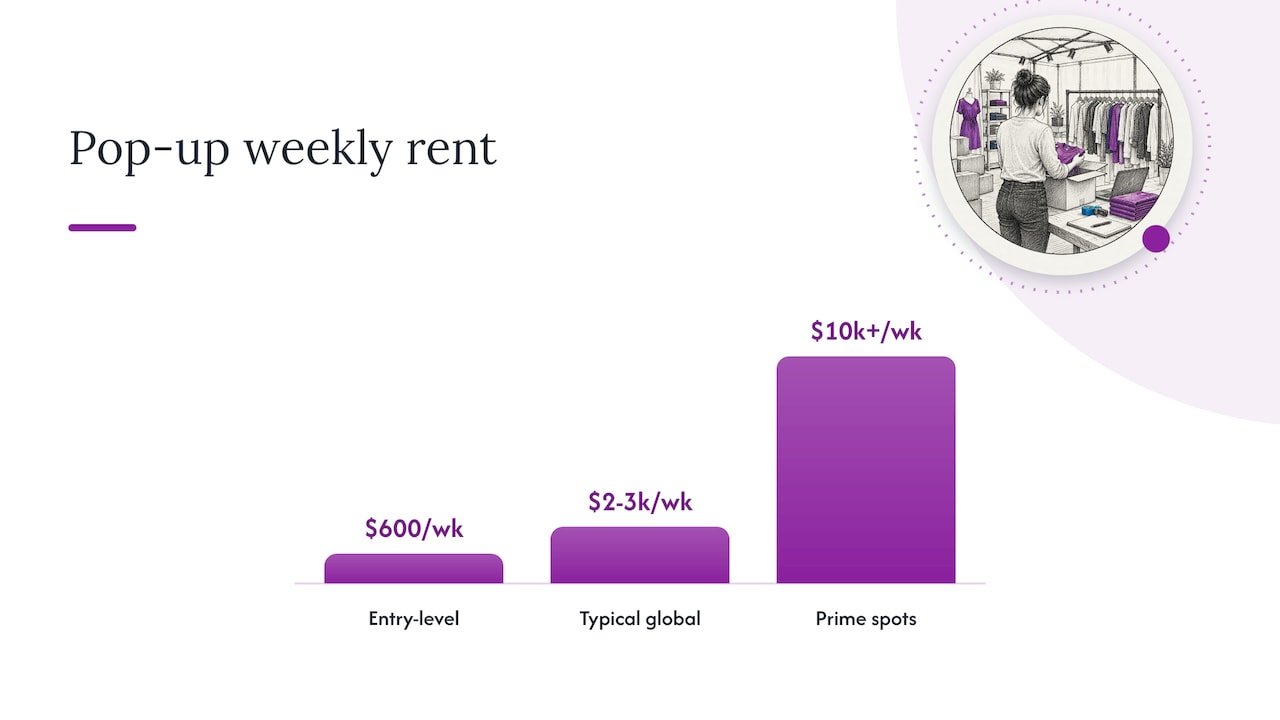
Storefront data reported by Chief Marketer in September 2026 put typical pop-up rent at $2,000 to $3,000 per week globally. Entry-level spaces averaged about $600 a week, and prime spots such as Beverly Hills ran $10,000 a week or more. Small businesses can also launch cheaply: survey data cited by the Miami Herald in July 2026 found that 44% of pop-ups cost under $5,000 to set up.
Pop-ups suit a test run of a few days to a few months. Past that, weekly rent adds up and you have built nothing you own.
Mall kiosks: quick, but the landlord sets the pace
A kiosk looks simple, yet the landlord controls design approval, fixture standards and the schedule. GGP’s retailer guide to store build-outs puts kiosk build-outs at roughly 19 to 27+ weeks from lease signing, and simple signage and paint-only jobs at 15 to 27+ weeks. That is quick compared with a full store. It is not fast if you need to open next month.
Conventional build-out: slowest
The same guide puts full inline store build-outs at about 24 to 50+ weeks. RolloutIQ’s retail rollout timeline explains much of why. A tenant build-out may clear permitting in four to eight weeks in a fast suburb and take eight to twelve weeks or more in a major coastal city. Long-lead equipment such as rooftop HVAC units and electrical switchgear has run twenty to forty weeks or longer to procure in recent years.
If you must have a long-term inline location, this is the path. If speed is the priority, it is the one to avoid.
Modular and prefab: faster because work overlaps
The Modular Building Institute’s retail overview describes why prefab shortens schedules. Site work and module fabrication happen at the same time, and units are inspected at the factory before they reach the site. The institute says timelines that would last 18 to 24 months for a traditional build can compress to as few as 9 to 12 months. It also says modular space can be relocated, expanded or reconfigured as needs change, for permanent stores or temporary pop-up shops.
Those figures describe full commercial projects. A single small shop or kiosk is a much smaller job, so your own schedule will depend on the size of the unit, the foundation and your local approvals.
Two prefab formats suit small retail:
- Container shops. A fabricated unit arrives with the shell and fit-out largely done at the factory. Our guide to container shop design, costs and layouts covers how the 6 to 10 week design-to-delivery process works.
- Insulated panel kits. Flat-pack wall and roof panels assemble on a prepared base. We designed them for DIY assembly without special skills, and our page on prefab build time explains the 2 to 9 on-site days.
How long will each option really take?
The timeline that matters is not construction. It is the whole path from decision to open sign. Here is a realistic way to frame it:
- Decide on the site and the use. Is it your land, a leased lot or a landlord’s unit? This sets which permits apply.
- Check with the city. Ask the planning or permitting office about zoning for retail, temporary structure rules and any signage permit.
- Order or reserve. Reserve a pop-up unit, or order the container or kit. Fabrication or shipping time starts here.
- Prepare the site. Foundation, pad or footings, plus utilities if the shop needs power, water or data.
- Install. Setting a unit or assembling panels.
- Fit out and inspect. Fixtures, point of sale, final inspection or sign-off.
- Open.
Steps 2 and 4 are where schedules slip. Construction is rarely the surprise. Schedule risk concentrates in work outside the builder’s control, and RolloutIQ’s Nariman Shariat identifies permitting as the largest risk, because it depends on a third-party review queue and varies by jurisdiction. Start the permit conversation first and order second.
What a quick retail space costs
Budget in three parts: the space itself, the fit-out, and the running costs.
Renting. As above, pop-up rent runs from about $600 a week at the entry level to $10,000 a week or more in prime spots. Add fixtures, stock, staffing, insurance and marketing.
Owning. A container shop or panel kit is a purchase, plus the foundation, utility hookups, delivery and permits. We do not publish prices for our kits and container units. Browse the product catalog and send an inquiry with your size, location and use, and we will quote against those details.
Cost drivers to expect. Size, local labor rates, rush timelines and finish quality move the total most. When you plan, ask yourself these questions:
- How many months will you trade from this location? If the answer is a few weeks, renting usually wins. If it is years, owning starts to make sense.
- Do you need the shop to move? Relocatable units keep their value when you change sites.
- Who pays for utilities and site work? These are often the line items people forget.
Permits and codes: the step that decides your date
Permit rules are local. The examples below show what cities commonly ask for, not what your city will require. Always confirm with your own building or planning department.
- Houston, Texas. The City of Houston temporary building guideline says temporary structures over 120 square feet used for gatherings of 10 or more people need approval and, where required, a building permit. It also says temporary structures must be completely removed before 180 days after installation.
- Sterling, Illinois. The city’s temporary structure application limits structures to 180 days in any 12-month period. No structure may go up for more than 72 hours without a permit, and the fee is $25.00.
- Eureka, California. The municipal code on temporary uses and structures requires an encroachment permit in the public right-of-way and a business license for commercial activity. It also bars obstruction of pedestrian and vehicle traffic and requires on-site trash receptacles. The site must be returned to its original state afterward.
The lesson is that “temporary” has a legal meaning and a clock. If you plan to keep a shop for years, you will probably need to treat it as a permanent structure, with a foundation, a building permit and inspections. Our guide to container retail permits for a US shop or kiosk lists the questions to take to your city.
A few practical habits help:
- Call the permitting office before you pay a deposit, and ask what they require for a retail structure of your size and on your type of lot.
- Ask whether a pre-engineered or factory-inspected unit simplifies review in your jurisdiction.
- Separate the business paperwork (business license, sales tax registration, insurance) from the building paperwork, and run them in parallel.
- If you serve food, expect health department review on top of building review.
Designing a small shop that sells
A small footprint does not need to feel small. Use a simple customer path:
- Entry. The storefront should say what you sell at a glance. Keep the door, signage and window clear.
- First 10 to 15 feet. Show your best products here, before the customer commits to walking in.
- Browse zone. Group products by collection or use, so shoppers understand the range.
- Checkout. Place the register where it does not block the flow, with room for a short line.
- Visibility from outside. A glass door, a service window or a bright sign gives passers-by a reason to stop.
Reusable, modular fixtures speed up every opening. Shelving that snaps together, counters on casters and removable wall graphics let you set up in hours. The same idea applies to the floor: trade show flooring ideas show how modular tiles go down quickly and lift again when you move.
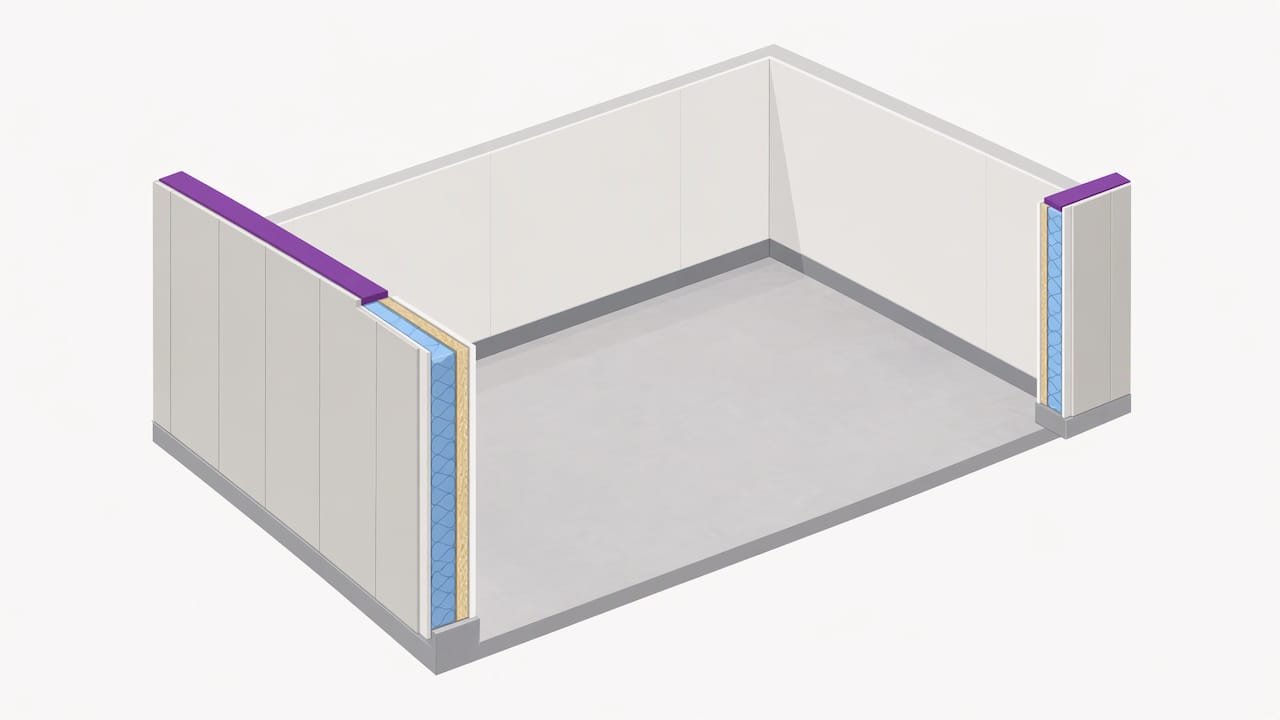
If you build from insulated panels, the walls are an advantage inside the shop too. Our panels combine structure and insulation, and we designed them for energy-efficient use, which helps keep a small retail room comfortable.
Timing and location for a quick launch
A fast launch still needs a good week to open in. Match the opening to your customers rather than to your own readiness:
- Season. Gift, holiday and event-driven products belong in the weeks when people shop for them. Work backward from that date, including permit time.
- Foot traffic. Pick a spot where your customer already walks, drives or parks: a farmers market edge, a busy lot, a row of shops or an event venue.
- Visibility and access. Check parking, street frontage, and whether a sign can be seen from the road.
- Utilities. Confirm power, water and data before you choose a lot. Running them can cost more time than the shop itself.
- Lease terms. If you rent the land, make sure the landlord allows a structure, and that your lease is long enough to justify owning one.
Because the question of when to launch varies by product and city, use your own sales history and local event calendars to set the date, then build backward from it.
Mistakes that delay a retail launch
- Ordering before checking zoning. A unit that cannot legally sit on your lot is an expensive lesson.
- Treating permits as an afterthought. They are the largest schedule risk, so start them first.
- Forgetting site work. Foundation, grading and utilities have their own lead times.
- Ignoring landlord or center rules. Mall and shopping-center landlords have their own fixture standards and sign-off steps.
- Waiting on long-lead equipment. HVAC, electrical gear and refrigeration can take months. Choose standard equipment early.
- Underbuilding for growth. Choose a format you can expand. Panel kits and connectable modules let you add rooms later. Our guide to connecting container and panel modules shows how.
Perspective
Most people who search for a quick retail space are really asking two questions: how soon can I open, and what will I have when it is over? Renting answers the first. Owning answers the second.
We build for the owner. A shop made from structural insulated sandwich panels goes up fast because the wall, the insulation and the structure arrive as one part. Our kits are designed so that people with no special building skills can assemble them without heavy tools, and our container shops arrive as finished units for owners who prefer to skip assembly altogether.
The point is not to avoid paperwork. It is to make the part you control, the build itself, as short as possible, so that your time goes into permits, stock and customers. A shop that is yours can also be reused, expanded or moved, which a rented week never can.
Kian
Build a shop you own
If you have a lot, a pad or a development site and want a retail space that outlasts a short lease, start with our container shops, offices and panel kits. We offer DIY kits for rooms and offices, ready-to-use container shops and offices, and insulated wall and roof panels. All are designed for rapid assembly and customization.
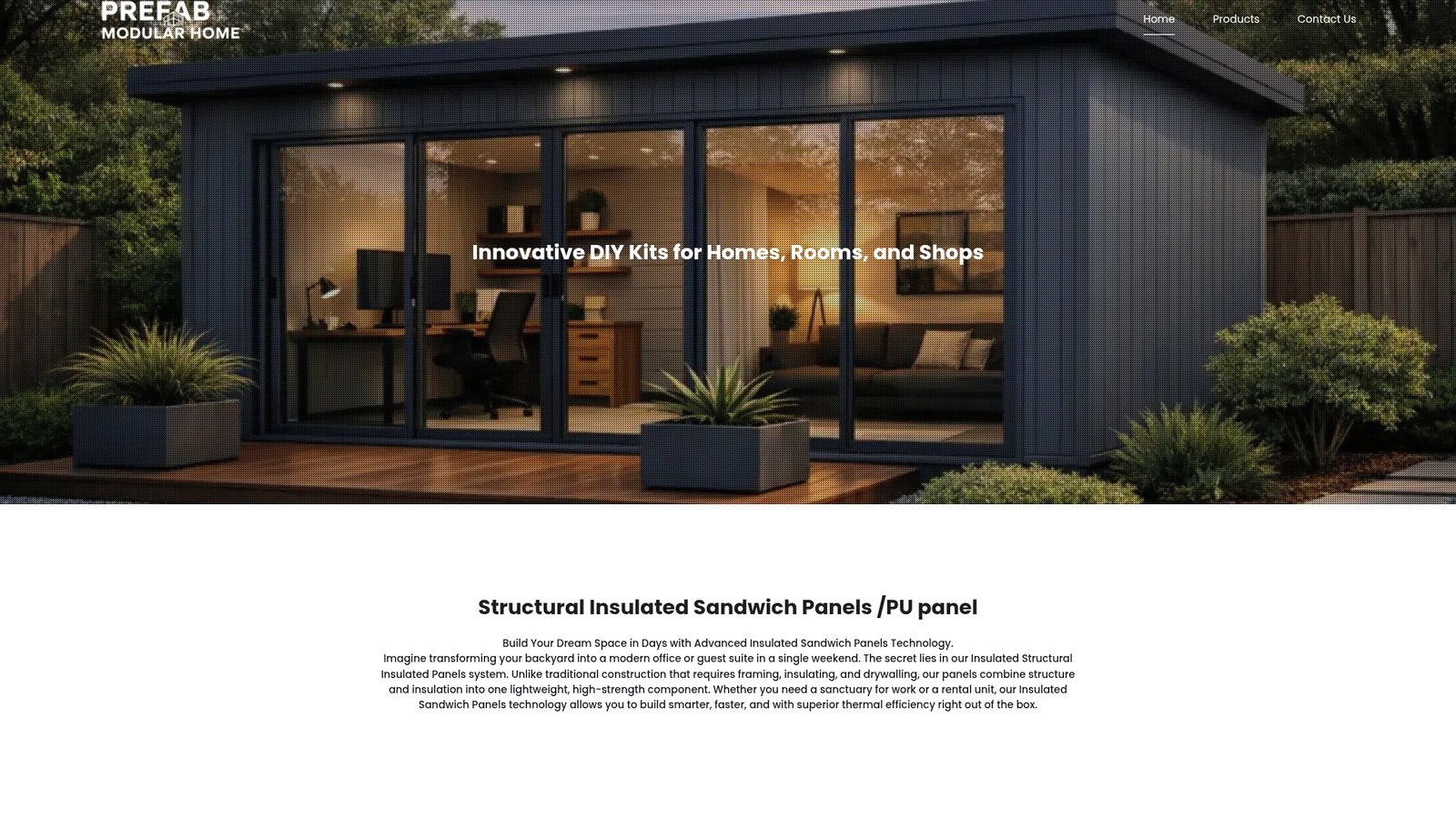
Want only the shell? Our insulated wall and roof panels are sold on their own. Send us your size, site and intended use through the site and we will point you to the right product.
FAQ
How fast can I open a retail space?
A rented pop-up can be ready in days, since the room already exists. A prefab shop on your own land takes longer, because you need permits, a base and delivery or assembly. A conventional build-out is slowest, with landlord guides citing 24 to 50+ weeks for a full inline store.
Is a container shop or a panel kit faster?
A container shop arrives largely finished, so on-site time is short. A panel kit is flat-packed and assembled on your base. Our page on prefab build time explains the on-site days for kits. Choose by size, layout flexibility and whether you want to assemble it yourself.
Do I need a permit for a temporary shop?
Usually yes. Many cities require a permit for temporary structures and set a removal deadline. Examples include 180 days in Houston and Sterling, Illinois. Call your local building or planning office before ordering, because rules differ by city and by lot.
Is renting or owning cheaper?
It depends on how long you trade. Pop-up rent can run from about $600 to $10,000 a week or more, so a short test is cheap and a long stay is not. Owning a shop means a larger upfront cost but no weekly rent, and the unit can be moved or reused.
Sources
- Modular Building Institute: Retail and commercial sector overview
- Chief Marketer: Brands eye short, 4-day pop-up shops
- Miami Herald: Pop-up shops are everywhere in 2026
- GGP Retailvisory: The store buildout blueprint
- RolloutIQ: The retail rollout timeline
- City of Houston Permitting Center: Temporary building guideline
- City of Sterling, Illinois: Application for temporary structure
- City of Eureka, California: Temporary uses and structures