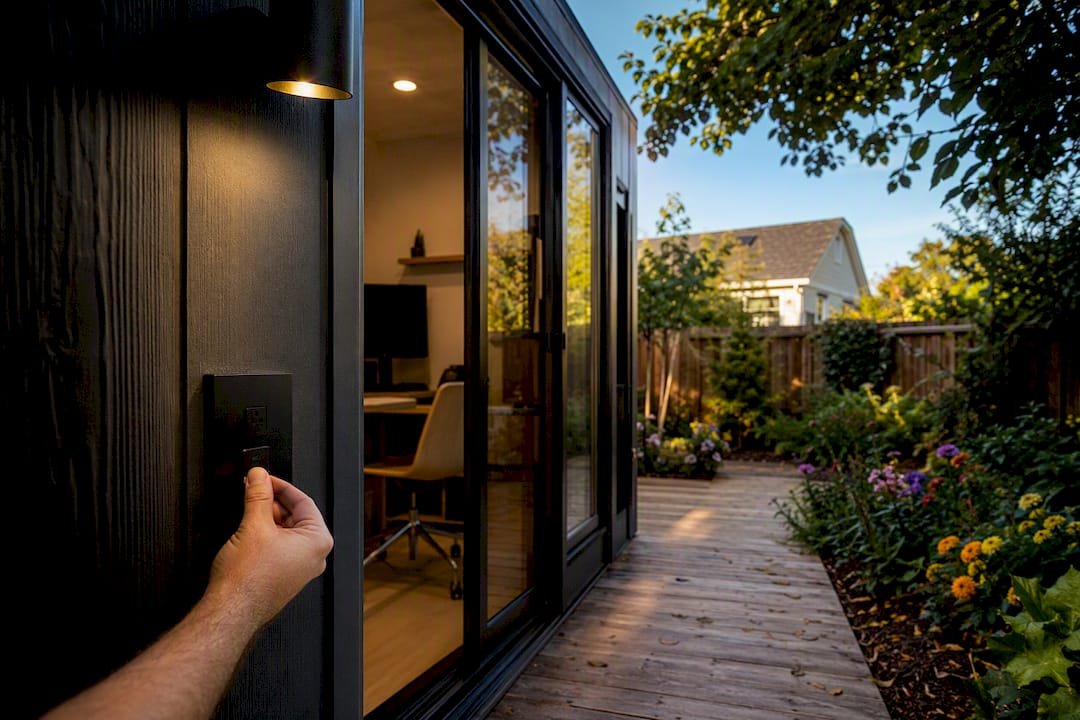
Expect to pay roughly $4,500 to $8,000 for a basic indoor privacy booth, $14,000 to $30,000 for a turnkey backyard pod, or $30,000 and up for a premium custom studio. A bare DIY shell kit can start near $1,500 to $4,000 before you add insulation, wiring, or finishes.
The biggest budget-killers usually aren’t the pod itself. Foundation work, electrical hookups, and delivery routinely get left off the sticker price and tacked on later.
- Indoor booth: $4,500–$8,000
- DIY shell/kit: $1,500–$4,000 (structure only)
- Compact backyard pod: $14,000–$20,000
- Standard backyard pod: $18,000–$30,000
- Premium/custom studio: $30,000+
For homeowners comfortable with basic assembly or willing to coordinate a local contractor, a prefab insulated-panel DIY kit tends to deliver the best balance of cost, speed, and energy performance.
Key Takeaways
A prefab insulated-panel kit typically delivers the lowest total cost per square foot once labor and energy savings are factored in against traditional backyard builds.
| Point | Details |
|---|---|
| Know your price tier | Indoor booths run $4,500–$8,000, turnkey backyard pods $14,000–$30,000, premium studios $30,000+. |
| Budget for hidden extras | Foundation, electrical trenching, delivery, and permits often add thousands beyond the listed price. |
| Site prep drives cost swings | Foundation type and distance to your electrical panel are the two biggest site-dependent cost variables. |
| Break-even takes years | Coworking break-even typically lands around 4–8 years depending on usage and local rates. |
| Prefab panels cut labor and energy costs | Prefabmodularhome’s structural insulated sandwich panels combine structure and insulation for faster, cheaper assembly. |
Table of Contents
- What Drives Home Office Pod Cost by Type?
- What’s Included in the Price, and What Costs Extra?
- How Much Does Site Prep Add to the Total?
- Is a Home Office Pod Worth the Investment?
- What Should You Ask Before You Buy a Pod?
- Why Prefab Insulated Panels Change the Cost Equation
- Sources
What Drives Home Office Pod Cost by Type?
Pod pricing splits into clear tiers, and knowing which one matches your actual need saves you from overpaying for features you won’t use.
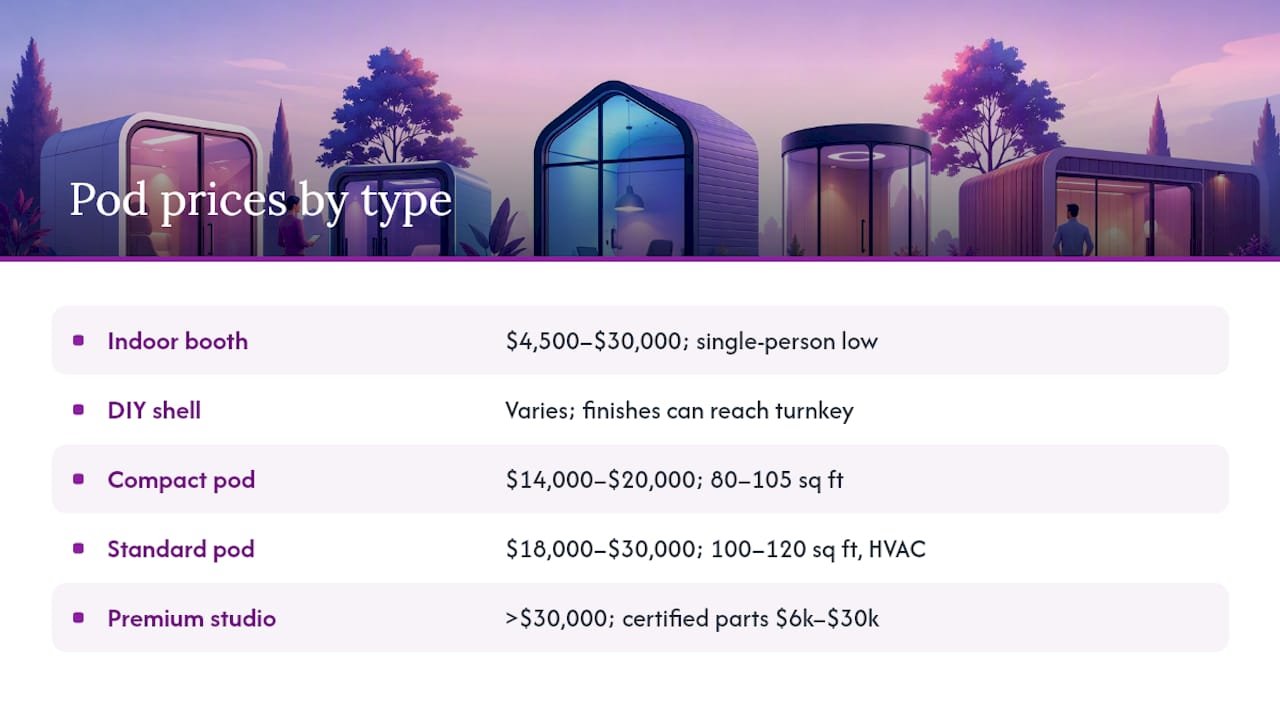
Indoor privacy booths sit at the low end. These plug-and-play units need minimal site work, just a flat floor and an outlet, and prices commonly land between $4,500 and $30,000 depending on size and finish, with single-person booths clustering near the bottom of that range.
DIY shell or flat-pack kits look like the bargain option, and structurally, they are. But a shell alone doesn’t finish itself. Add insulation, electrical rough-in, windows, and interior finishes, and a DIY shell can creep close to turnkey pricing once every line item lands on the invoice.
Compact backyard pods, typically 60 to 100 square feet, are where most remote workers land. Turnkey compact models around 80 to 105 square feet often list between $14,000 and $20,000 delivered, usually including basic electrical and a finished interior.
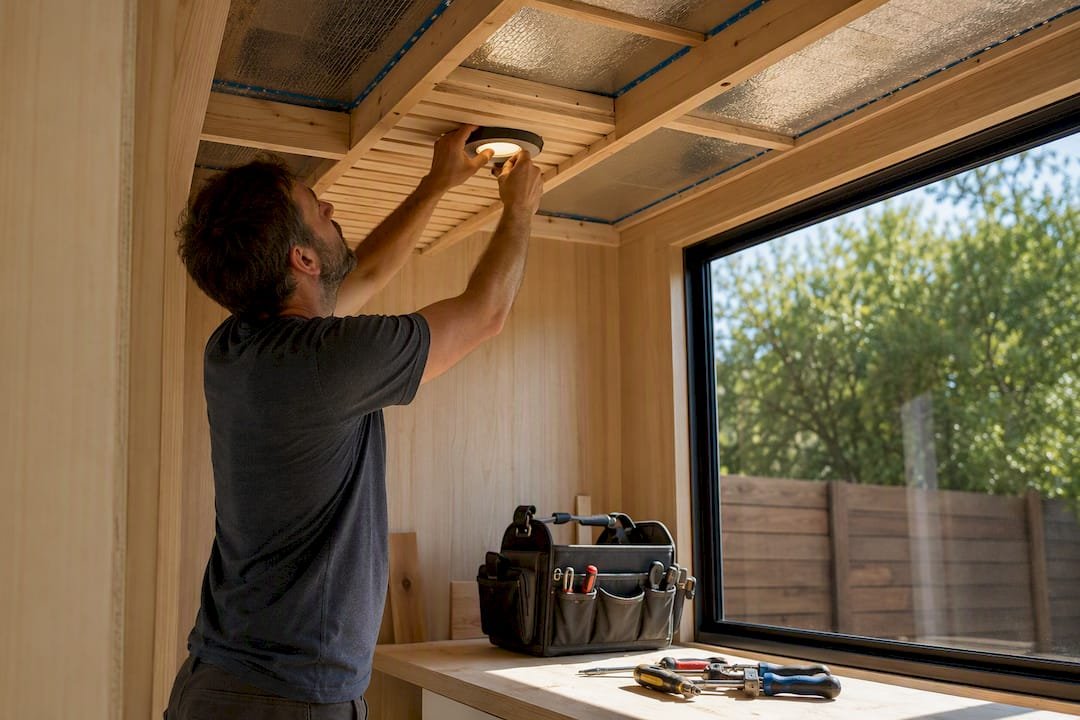
Standard backyard pods (100 to 120 square feet) push into the $18,000 to $30,000 band. Extra square footage means room for a proper desk setup, a small HVAC unit, and often a bathroom or kitchenette hookup point.
Premium or custom studios climb past $30,000 fast. Acoustic certification, brand-name fabrication, and full ventilation systems are the usual suspects. A certified single-person pod with sound ratings can run $6,000 to $8,000 on its own, and multi-person commercial pods commonly hit $12,000 to $30,000 before site work.
What’s Included in the Price, and What Costs Extra?
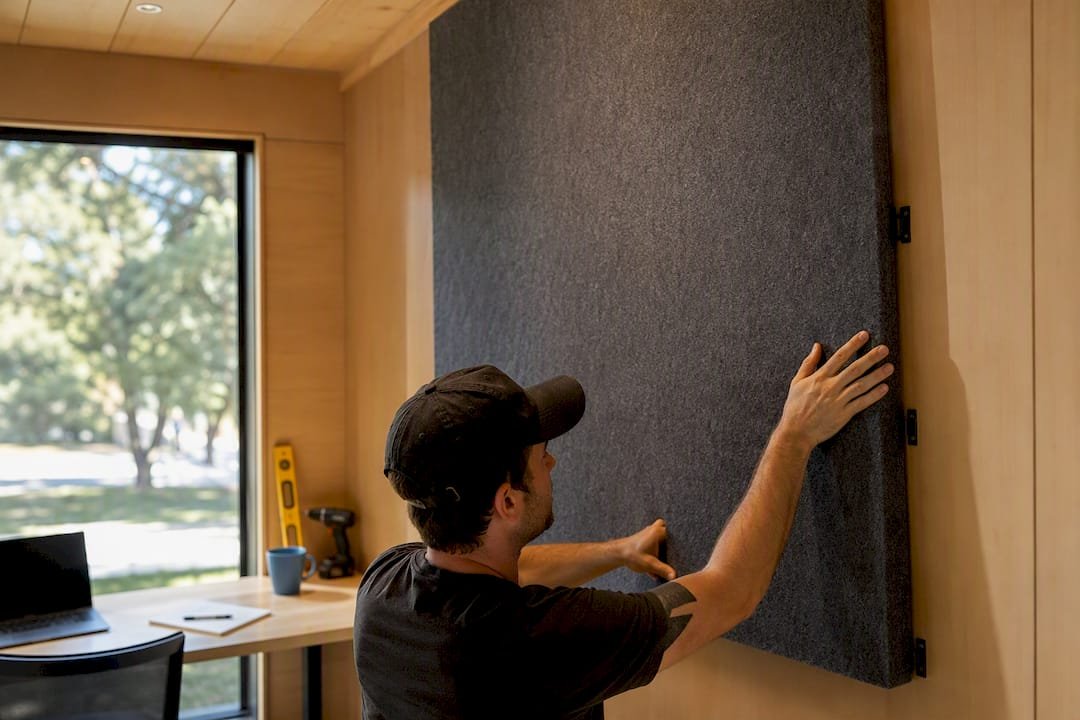
Most published prices cover the shell, insulation, basic wiring, and standard doors and windows. Everything past that is a line item.
- Delivery freight — often $500 to $2,500 depending on distance from the manufacturer.
- Crane or rigging — needed for pods that can’t be walked into place by hand; adds $500 to $1,500 in many markets.
- Foundation or slab — a concrete pad runs higher than screw piles in most regions.
- Electrical trenching and panel work — cost scales with distance from your main panel and whether it needs an upgrade.
- HVAC or mini-split — a mini-split unit alone can add $2,000 to $4,000 installed.
- Permits — fees and requirements vary by city and county.
Pro Tip: Ask every supplier for a single “delivered and installed” number, not just the unit price. That’s the only figure you can actually compare across vendors.
How Much Does Site Prep Add to the Total?
Site work is where quotes diverge the most, and it’s rarely optional.
- Foundation choice matters: a poured slab costs more upfront but suits heavier structures, while screw piles skip excavation and work well on uneven ground, though piles can cost more per unit in areas with limited contractor access.
- Electrical trenching distance from your home’s panel to the pod site drives labor cost directly. A run of 20 feet is cheap; 100 feet across a yard is not.
- Panel upgrades become necessary if your home’s electrical service is already near capacity.
- Permits vary wildly by jurisdiction. Some counties treat a backyard pod as an accessory structure requiring a full permit; others don’t blink at anything under 200 square feet. Call your local permitting office before you order anything.
- Delivery and assembly timelines range from a single weekend for a bolt-together kit to several weeks for crane-assisted turnkey installs.
Is a Home Office Pod Worth the Investment?
Most buyers finance a pod through a HELOC or a renovation loan, both of which tie your monthly payment to the loan term and rate rather than the sticker price. For those looking to redefine their home workspace, see how to create a private office without losing the open feel. A longer term lowers the monthly hit but raises total interest paid.
- Home-office tax deductions may offset part of the cost if you use the space exclusively for work; a CPA can confirm eligibility for your situation.
- Break-even against a coworking membership often lands around 4 to 8 years, depending on local coworking rates and how much you actually use the space.
- A pod built with future flexibility in mind, extra conduit, rough plumbing, can convert to a rental unit or ADU later, which shifts the math from “expense” to long-term asset.
What Should You Ask Before You Buy a Pod?
Getting an apples-to-apples comparison across suppliers means asking the same questions every time.
- Confirm the total price including delivery and installation, not just the base unit cost.
- Clarify responsibility for foundation work.
- Determine if electrical hookup is included or requires separate contracting.
- Ask whether HVAC is part of the price or an optional add-on.
- Verify warranty coverage and duration for pod components.
- Check current lead times for ordering and delivery.
- Confirm if the supplier assists with permit documentation.
Pro Tip: Walk away from any quote with a vague change-order clause. If a supplier can’t tell you upfront what triggers an extra charge, assume there will be several.
Why Prefab Insulated Panels Change the Cost Equation
Structural insulated sandwich panels do something traditional framing can’t: they combine the structure and the insulation into one piece, which cuts both labor time and energy loss in a single step. That’s the core advantage behind Prefab Modular Homes’s kit-based approach.
- Assembly happens in days, not weeks, because panels arrive pre-insulated and ready to bolt together.
- Lower on-site labor means fewer contractor hours billed at hourly rates.
- Tighter building envelopes mean lower heating and cooling costs long after installation.
- Best suited to homeowners who can manage basic assembly themselves or coordinate a local contractor for the final hookups.
Insulated sandwich panels reduce the number of separate construction trades needed on-site, which is where a lot of traditional-build cost and delay actually comes from.
A quick reality check on typical mistakes
Most cost overruns I see trace back to two things: underestimating site prep and building without any thought toward future use. If there’s a real chance you’ll want to add a bathroom or convert the pod to a rental later, rough in the conduit and plumbing lines now. It costs less than tearing open a finished wall in three years. Always check your local permitting rules before you order, and get a second opinion from a contractor if the site has drainage or grading issues.
Get a Straight Quote on a Backyard Office Kit
A prefab insulated-panel kit sidesteps the two biggest cost risks in this whole comparison: slow, labor-heavy construction and poor insulation that inflates your energy bill for years. Prefabmodularhome’s panels arrive structure and insulation combined, so assembly takes days instead of the weeks a stick-built shed or contractor-built studio typically demands.
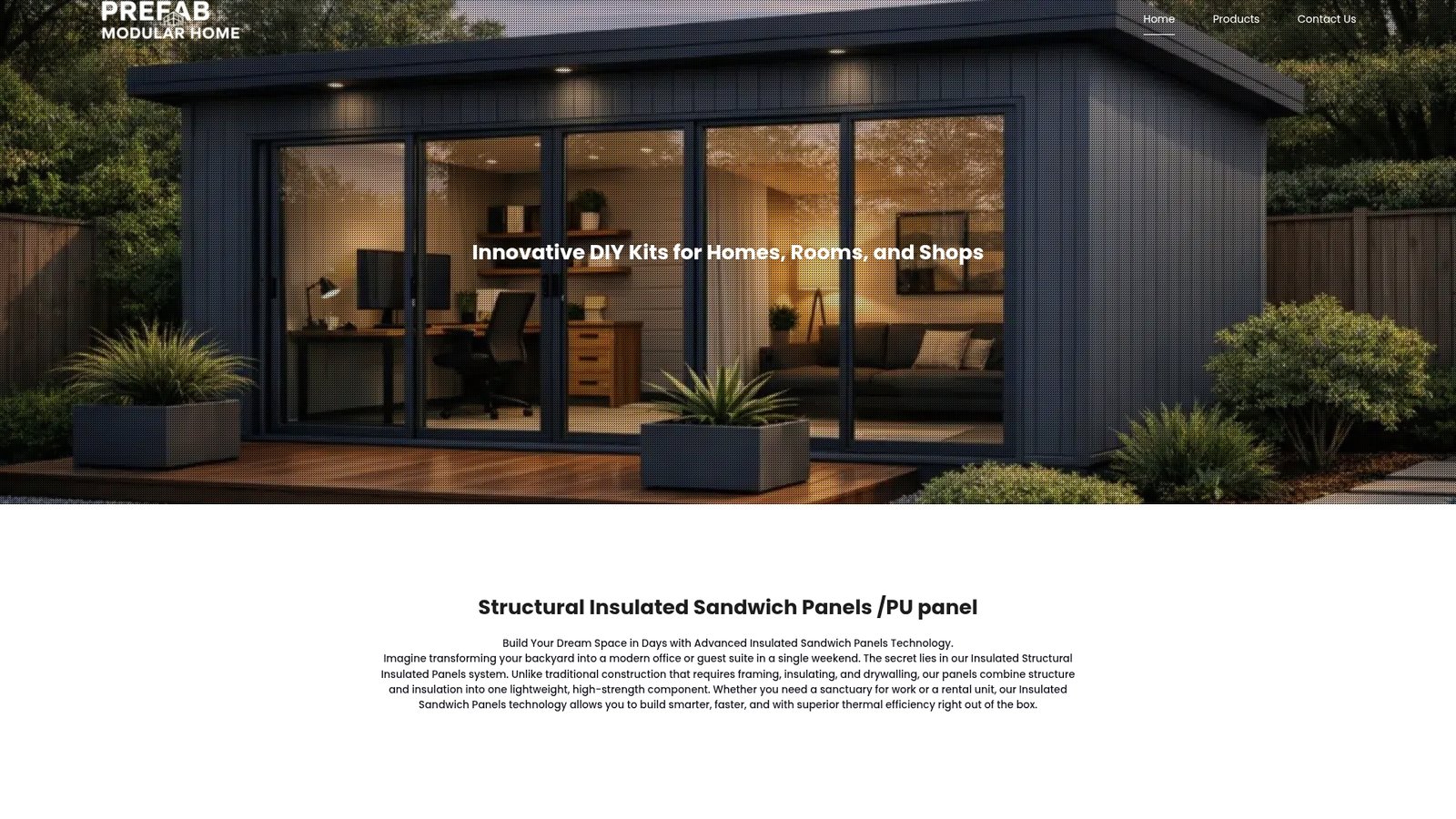
If you’re ready to see real specs and sizes, browse the modular backyard office kits or check the full product catalog for panel options and dimensions that match your budget tier.
Sources
- Office pod prices: What they cost by type and size (Autonomous)
- Office pod cost (K2 Space)
- How much does an office pod cost? (PrivacyPod, 2026)
- Office pods, booths & modular meeting rooms (Office Interiors)
Recommended
- Why Container Offices Are the Most Profitable Workspace Solution – Modular Homes with Structural Insulated Sandwich Panels
- Why Backyard Offices & Container Workspaces Are the Big Trend – Modular Homes with Structural Insulated Sandwich Panels
- Articles – Modular Homes with Structural Insulated Sandwich Panels
- Pre Built Container Home Cost and What Drives It – Modular Homes with Structural Insulated Sandwich Panels