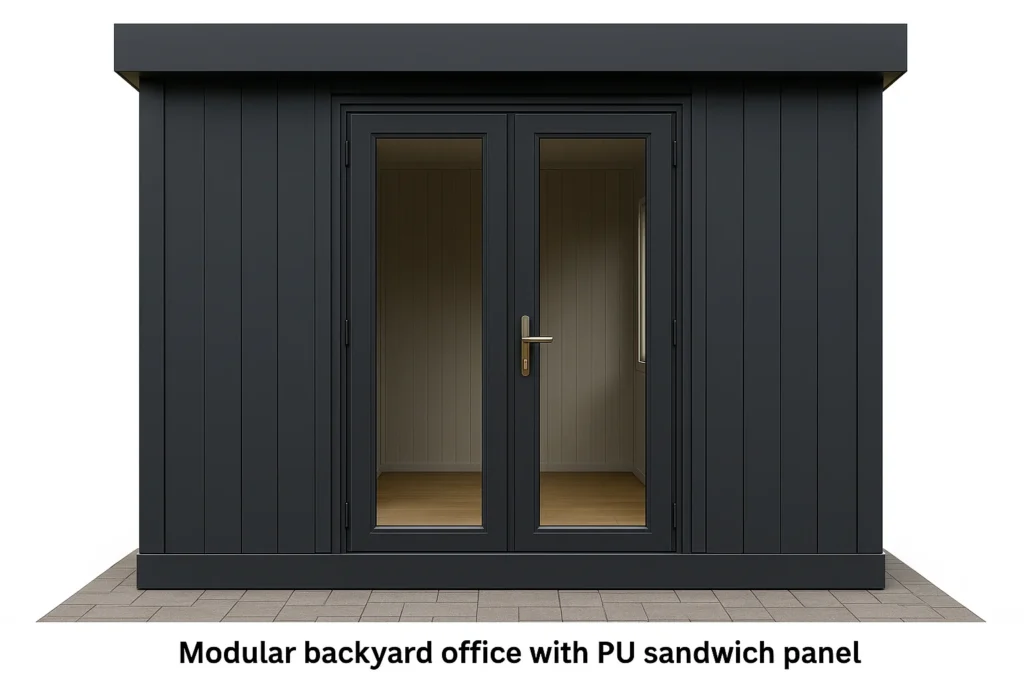
Modular backyard office with PU panel/sandwich panel
Are you dreaming of a productive workspace in your backyard or a cutting-edge office solution? The answer might lie in the innovative world of Structural Insulated Panels (SIPs). These high-performance building systems are changing the game in construction, offering numerous advantages over traditional methods.
Structural Insulated Panels (SIPs) are essentially a structural sandwich panel. They consist of a core of rigid foam insulation, typically expanded polystyrene (EPS), extruded polystyrene (XPS), or polyurethane (PUR), sandwiched between two structural facings, usually oriented strand board (OSB) or magnesium oxide boards. The magic is that the SIPs act as both structural and insulation elements, making them incredibly efficient.
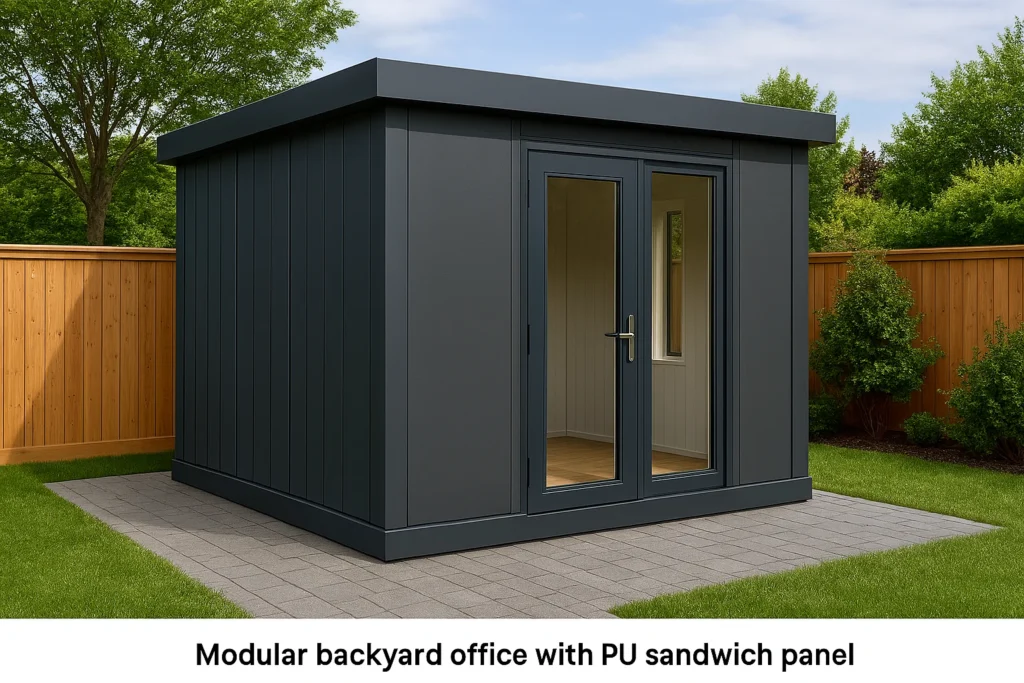
The beauty of SIPs extends to many applications. They’re becoming increasingly popular in backyard offices, providing a quick and efficient way to create a dedicated workspace. Similarly, their use in larger modular office buildings is on the rise, offering a streamlined construction process. You can even create prefab office spaces with SIPs, highlighting their suitability due to their efficiency and speed of construction.
However, using SIPs in any building project, including backyard offices and modular offices, requires compliance with building codes, standards, and local regulations. The rest of this blog post delves into these topics.
Benefits of SIPs for Backyard and Modular Offices
The advantages of using Structural Insulated Panels (SIPs) are numerous, especially when considering backyard office or modular office applications. Let’s delve into some key benefits.
Energy Efficiency and Insulation Advantages
SIPs are renowned for their superior insulation properties. The continuous insulation layer significantly reduces thermal bridging, meaning there are fewer gaps where heat can escape in the winter or enter in the summer. This translates to lower energy bills for both heating and cooling. Studies have shown that buildings constructed with SIPs can achieve energy savings of up to 50% compared to those built using traditional methods. This efficiency creates a comfortable interior climate, reducing drafts and ensuring consistent temperatures throughout the year. Imagine a cozy and consistent work environment, no matter the season. For more information on creating an energy efficient office, see our post on The Green Advantage of PU Panels.
Speed and Ease of Construction
One of the most appealing aspects of using SIPs is their ability to accelerate the construction process. Since the panels come pre-fabricated to the site, the assembly is rapid. This minimizes on-site labor and reduces overall construction time. This accelerated build schedule often leads to significant labor cost savings, which is a major benefit for anyone considering a backyard office or modular office.
Structural Integrity and Durability
Beyond their insulation benefits, SIPs offer robust structural advantages. The panels create a strong, airtight, and exceptionally strong building envelope. They are designed to withstand significant wind loads and are often used in areas prone to seismic activity. The airtight seal of a SIPs structure also minimizes the risk of moisture intrusion, preventing mold growth and ensuring the longevity of your investment. These factors make them ideal for various environmental conditions, including those related to modular office builds.
Understanding Prefab Office Construction with SIPs
Prefab office construction is revolutionizing the construction industry, and SIPs play a pivotal role in this transformation.
Explain the Prefab Office Concept
Prefab office construction involves a significant amount of factory fabrication. This means the walls, roof, and other components are precisely cut and pre-fabricated in a controlled environment. This off-site construction method offers several advantages, including reduced waste, improved quality control, and minimal site disruption. This is a stark contrast to traditional construction methods. To learn more about this method of construction, check out our post on Modern Kit Home Solution.
Highlight the Role of Modular Office Designs
Prefab office construction and modular office designs often go hand-in-hand. Modular office designs utilize pre-fabricated modules that are transported to the site and assembled. This modular approach allows for flexibility in design and scalability. For an example of a DIY kit room, check out DIY Kit Room / Modular Office & Gym.
How SIPs are used in the Factory and On-Site
SIPs are perfectly suited for prefab office processes. They’re precisely cut and pre-fabricated into walls, roofs, and floors in a controlled factory environment. These pre-fabricated components are then transported to the construction site and assembled. This is significantly faster than traditional stick-built methods.
Key Regulatory Considerations for SIPs (General)
Building with SIPs, like any construction project, requires a clear understanding of regulations.
Building Codes and Standards
When using SIPs, you need to be aware of the relevant building codes (such as the International Building Code, IBC) and standards. These codes outline the requirements for thermal performance, fire resistance ratings, and structural integrity. SIPs are rigorously tested and certified to meet these standards, ensuring a safe and compliant structure.
Importance of Local Regulations
Always research and comply with local building codes. Local regulations may dictate permissible building heights, setbacks (the minimum distance a structure must be from property lines), and other design considerations. These regulations can vary significantly based on your local jurisdiction and zoning districts.
Specific Regulations for Backyard Offices and Modular Offices
Navigating regulations can seem daunting, but it’s essential to ensure your project is compliant. Let’s look at the specific rules for backyard offices and modular offices with SIPs.
Local Zoning Laws Impacting Backyard Offices
Local zoning laws significantly impact backyard office construction. Zoning dictates setback requirements, height limitations, and the permissible uses of a property (residential, commercial, or mixed-use). These vary widely depending on the local jurisdiction and zoning district. Always check with your local planning and zoning department to ensure your project complies.
Permitting Processes for Modular Office Buildings
Modular office buildings also require a thorough permitting process. This involves submitting necessary documentation, such as architectural plans, structural calculations, and energy calculations. Regular inspections are also a part of the process, and compliance with local building codes is paramount. When using SIPs, there might be specific considerations within the permitting process. For more information on the process, you can read our post on Why Container Offices Are the Most Profitable Workspace Solution.
Fire Safety Regulations Specific to SIPs
Fire safety is of utmost importance in any office setting. Fire resistance ratings (how long a panel can withstand fire) are critical, and there are fire-stopping requirements (methods to prevent fire spread). The use of fire-rated materials, such as fire-resistant facings for SIPs, can help you meet the necessary building code requirements.
Structural Sandwich Panel Standards
Structural sandwich panels are integral to understanding SIPs and their applications.
What are Structural Sandwich Panels
A structural sandwich panel is a composite material consisting of a core material sandwiched between two skins or facings. SIPs are a specific type of structural sandwich panel.
Fire Rating Requirements of Structural Sandwich Panels
Fire ratings are determined through standardized testing, like the ASTM E119 test, which measures the time a panel can withstand fire exposure. Different fire ratings are required based on the building type and occupancy. Make sure you understand these ratings and requirements for your project.
Core Materials Within Structural Sandwich Panels
Various core materials are used within structural sandwich panels (and thus SIPs). These include expanded polystyrene (EPS), extruded polystyrene (XPS), and polyurethane (PUR). Each core material affects the panel’s thermal performance, fire resistance, and cost. Understanding these differences can help you make an informed decision for your project.
Inspecting and Maintaining SIP Structures
To ensure your SIP structure lasts, regular maintenance is vital.
Inspecting SIPs for Potential Issues
Regular inspection can help you spot potential problems early. Look for signs of moisture damage (discoloration, mold growth), delamination (separation of the facing from the core), and damage to the facing materials. Early detection is key to preventing larger, more costly repairs.
Maintenance Best Practices
Sealing penetrations (around windows, doors, and utilities) is crucial to prevent moisture intrusion. Proper drainage and ventilation are essential. Address any wear and tear promptly. Following these practices can help maintain the integrity of your SIP structure.
Ensuring the Longevity of a Prefab or Modular Office
Proper inspection and maintenance are vital to the long-term performance and sustainability of prefab offices or modular office buildings constructed with SIPs. These practices ensure the building’s longevity and reduce the need for costly repairs.
Conclusion: The Future of SIPs in Office Construction
In conclusion, Structural Insulated Panels (SIPs) offer a powerful solution for modern office construction.
Recap the Benefits and Regulatory Aspects
SIPs offer numerous benefits, including energy efficiency, speed of construction, and structural integrity. Understanding and complying with building codes, standards, and local regulations is essential.
Reiterate the Value of SIPs
SIPs create efficient, sustainable, and cost-effective backyard offices and modular office spaces.
Final Thoughts
The future of prefab offices utilizing structural sandwich panel technology is bright. SIPs will continue to grow and innovate in the construction industry, shaping the future of workspace design.