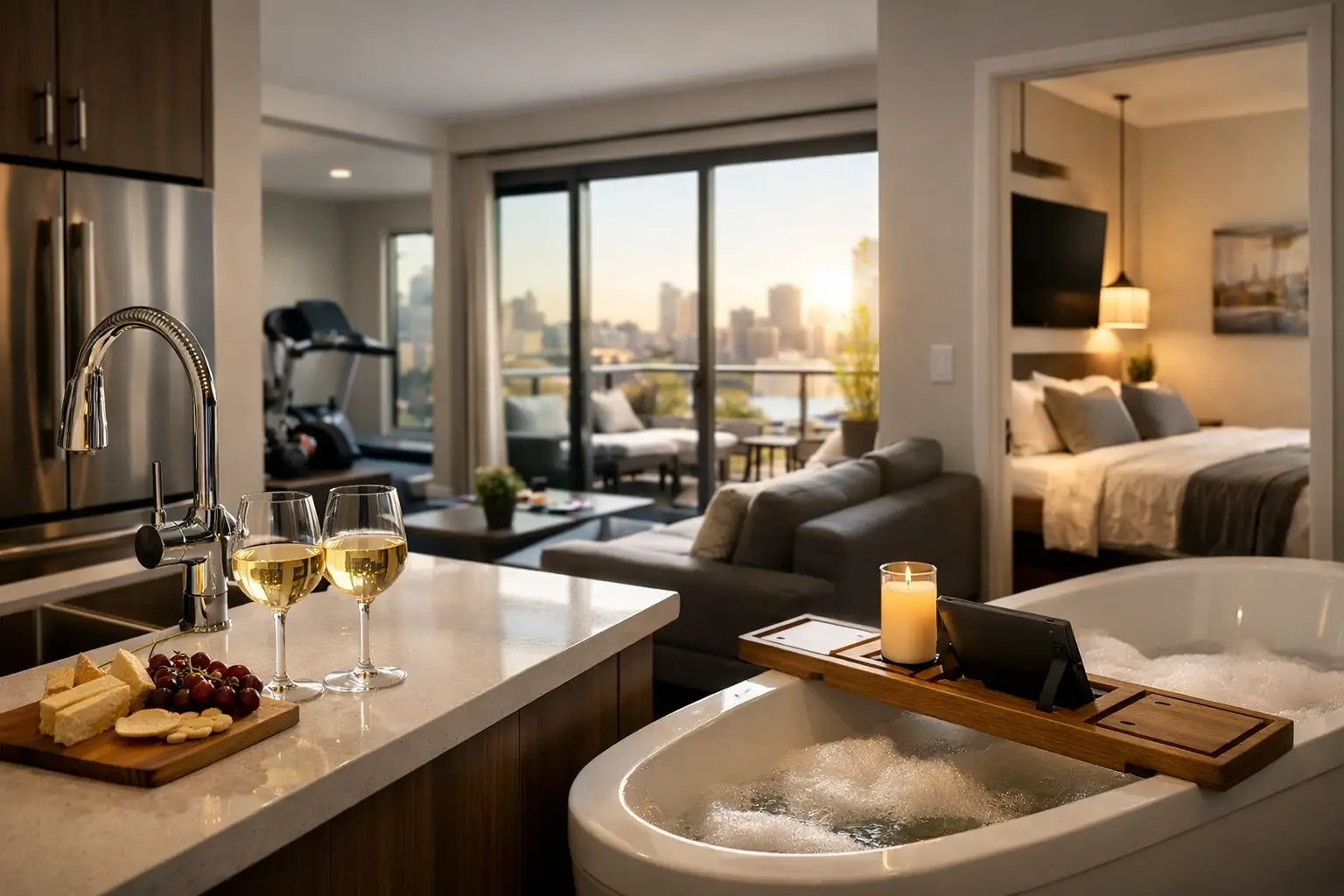
A rental suite does not need a large footprint to feel worth the rent. The top rental suite amenities are the ones that solve daily problems: keeping utility bills predictable, storing essentials, working from home comfortably, and creating privacy between the main residence and the unit. For property owners, the best choices also need to be durable, straightforward to maintain, and realistic for the size of the building.
That is especially true for backyard suites, laneway homes, accessory dwelling units, and compact modular rentals. Every square foot has a job to do. A well-insulated shell, a practical kitchen, and thoughtful utility planning will usually create more long-term value than decorative upgrades that look dated after a few seasons.
Start With the Amenities Tenants Feel Every Day
Rental demand varies by market, but comfort and operating performance are nearly universal priorities. Before adding premium finishes, establish the building systems that make a suite usable through summer heat, winter cold, rain, and frequent occupancy.
High-Performance Insulation and Climate Control
Thermal performance is one of the most valuable rental-suite features because it affects both comfort and monthly costs. A suite with poor insulation can feel drafty near exterior walls, overheat in direct sun, and force the tenant to rely heavily on heating or air conditioning. Those conditions can quickly outweigh a new countertop or upgraded light fixture.
For a modular build, insulated sandwich panels offer a practical starting point. Their self-supporting construction combines wall or roof structure with an insulated core, helping create a tight, consistent envelope with fewer weak points than a poorly detailed conventional assembly. A thermal-break design is particularly useful where steel components are part of the structure, since it helps limit heat transfer through the frame.
Pair the envelope with a properly sized mini-split heat pump or other efficient heating and cooling system. A mini-split is often a strong fit for a compact suite because it provides both functions without consuming valuable floor area for ductwork. The right equipment size depends on climate zone, insulation level, glazing, ceiling height, and solar exposure. Oversizing equipment is not a shortcut – it can lead to short cycling and uneven comfort.
Sound Control and Real Privacy
A rental suite is not truly independent if tenants hear every conversation, vehicle door, or appliance cycle from the main house. Sound control matters most at shared walls, ceilings, utility penetrations, windows, and entry doors.
Use acoustic insulation and appropriate wall assemblies where the suite adjoins another structure. Choose solid exterior doors with weatherstripping, and place bedroom windows away from driveways or shared gathering areas when the site allows it. Mechanical equipment should also be selected and installed with noise in mind. A quiet heat pump condenser located thoughtfully is better for both tenant comfort and neighbor relations.
Privacy is not only an acoustic issue. A dedicated entrance, distinct walkway, exterior lighting, and a small screened patio or entry zone can make a compact unit feel substantially more livable. These features can be modest, but they signal that the suite was planned as a residence rather than converted as an afterthought.
Top Rental Suite Amenities for a Compact Layout
In a small rental, storage and circulation determine whether the layout works. Tenants will forgive a compact living room more readily than a kitchen with no pantry space or a bedroom without a usable closet.
A Kitchen Built for Daily Use
A rental kitchen should support actual meal preparation, not just occasional reheating. Prioritize sufficient counter space, durable cabinets, a deep sink, task lighting, and outlets positioned where small appliances will be used. If space is limited, a single-wall kitchen can perform well when paired with tall pantry storage and a compact but full-function appliance package.
The appliance decision depends on the tenant profile. A studio aimed at short-term or single-occupant use may work with an apartment-size refrigerator and two-burner cooktop. A one-bedroom unit intended for a long-term tenant is usually more competitive with a full-size refrigerator, four-burner range, dishwasher, and vented range hood where practical. The extra space and utility planning are often justified by a broader renter pool.
Laundry, Not Just a Hookup
In-unit laundry is consistently valuable, especially when the suite is detached or located in an area with limited nearby laundry services. A stacked washer and dryer can fit into a closet, while a ventless heat-pump dryer may simplify installation where exhaust routing is difficult.
Do not treat laundry as an isolated appliance decision. Plan the water supply, drain, electrical load, ventilation, access panel locations, and floor protection during the design stage. Serviceable utilities reduce disruption later, which matters when the unit is occupied.
Storage That Does Not Steal Living Space
Built-in storage can make a 400-square-foot suite function like a much larger one. Include a real entry closet or wall hooks with a bench, a linen cabinet, kitchen pantry storage, bedroom closet capacity, and overhead cabinets where they do not make the room feel closed in.
A platform bed with drawers or a wall bed can work in a studio, but these features should be selected for durability. Moving mechanisms are useful only when they can handle regular use and can be repaired without specialty parts. Fixed, simple storage is often the better long-term rental decision.
Invest in Durability Where Turnover Happens
The best rental materials are not necessarily the most expensive. They are the ones that tolerate cleaning, moving furniture, moisture, and routine wear without needing constant touch-ups.
Use waterproof or highly water-resistant flooring in kitchens, bathrooms, entries, and throughout compact open layouts when possible. Luxury vinyl plank, tile, and similar resilient surfaces are popular because they are easy to clean and replace in sections if damaged. Choose washable paint in a neutral color range, quality cabinet hardware, and countertops that resist staining and impact.
Bathroom construction deserves special attention. A properly vented bath fan, moisture-resistant wall finishes, a durable shower surround, good lighting at the vanity, and storage for towels and toiletries are practical amenities tenants notice immediately. A walk-in shower may improve accessibility, but it must be detailed with correct drainage and waterproofing. In a small suite, avoiding water damage is far more valuable than adding an oversized shower fixture.
Technology and Security That Make Sense
Smart features can improve a rental, but only when they reduce friction rather than introduce another system to troubleshoot. Reliable Wi-Fi access, enough outlets, USB charging options, and a designated work surface are useful for tenants who work remotely or study from home.
A smart thermostat can help manage energy use, particularly in a well-insulated modular suite. However, owners should retain a clear process for account transfers, access permissions, and maintenance. The same applies to smart locks. They can simplify move-ins and eliminate key handoffs, but the lock should also have a reliable manual access option and battery-alert process.
Exterior lighting at the entrance and parking area improves security and everyday usability. Include motion-sensor lighting where appropriate, visible unit numbers, and a secure place for package delivery. Cameras require more judgment. They may be appropriate for shared exterior approaches, but they should never compromise a tenant’s reasonable expectation of privacy.
Match Amenities to the Rental Strategy
Not every suite needs the same package. A backyard office or furnished mid-term unit may benefit from a built-in desk, strong internet infrastructure, and flexible furniture. A long-term one-bedroom rental usually benefits more from laundry, kitchen capacity, storage, and separate outdoor space. A remote-site housing unit may place greater value on rugged finishes, reliable heating, and easy-to-service mechanical systems.
| Rental use case | Highest-priority amenities | Avoid overspending on | |—|—|—| | Long-term backyard suite | Full kitchen, laundry, storage, efficient HVAC, privacy | Fragile custom furniture and trend-driven finishes | | Furnished mid-term rental | Wi-Fi workspace, durable furnishings, smart entry, practical kitchen | Large specialty appliances with limited use | | Compact studio | Convertible layout, storage, climate control, bright lighting | Oversized fixtures that restrict circulation | | Remote or jobsite housing | Heavy-duty shell, insulation, secure entry, serviceable utilities | Delicate finishes that are difficult to replace |
For owners comparing construction paths, the building system affects which amenities are practical. A customizable insulated panel kit provides layout flexibility for a permanent or semi-permanent rental suite, while a turnkey shipping-container unit can be a strong choice when mobility, heavy-duty steel construction, and rapid deployment are priorities. In either case, utility connections, local zoning, permits, setbacks, fire separation, and foundation requirements must be confirmed before finalizing the design.
PMH structures are designed for buyers who need usable space without taking on the uncertainty of a long conventional build. The most successful rental suites start with that same mindset: build the envelope and core systems correctly, then add amenities that make daily living easier.
A renter may first notice the finishes, but they decide to stay because the suite is quiet, comfortable, secure, and easy to live in. Design around those realities, and even a compact unit can earn its place as dependable income-producing space.